





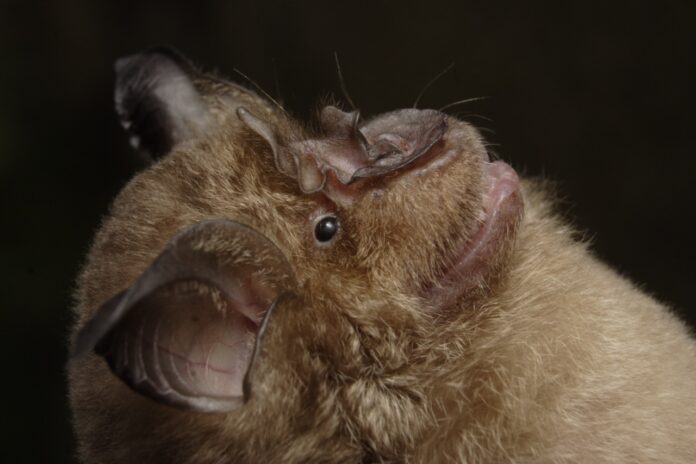
While SARS-CoV-2 caused a global pandemic that was immensely difficult to contain and control, it seems that immunity against this virus likely extends to other closely related coronaviruses, so say scientists from The Pirbright Institute and King’s College London. In their new paper, published in PLOS Biology, the team explored how a group of bat sarbecoviruses interact with angiotensin-converting enzyme 2 (ACE2), the cellular receptor used by many coronaviruses to enter host cells.
Sarbecoviruses are a diverse group, which includes the coronavirus sub-group that includes SARS-CoV-1 and SARS-CoV-2. Understanding how they interact with the primary receptor in target cells can clarify the potential for other related viruses to infect other species.
“While spillover risk can never be eliminated, widespread exposure to SARS-CoV-2 may have raised the barrier for related viruses to establish themselves in human populations,” said lead author Nazia Thakur, DPhil, a postdoctoral scientist at The Pirbright Institute.
ACE in the hole
Researchers investigated the ability of these viruses to use ACE2 proteins from a broad range of bat and mammalian species, including humans, livestock, rodents and animals previously proposed as intermediate hosts.
Using libraries of ACE2 receptors including 34 species, the team was able to cross compare 15 representative bar coronavirus spike proteins and their interactions with ACE2. Broad ACE2 usage was a defining feature of viruses closely related to SARS-CoV-2, including the BANAL viruses discovered in Laos. Viruses from other evolutionary groups, including a novel U.K. bat coronavirus RhGB07, showed more restricted receptor usage. To aid in their analyses the Spike structure of RhGB07 was also resolved by collaborators in Switzerland.
Their analysis identified a “generalist phenotype” sarbecoviruses, which can use ACE2 receptors from many different species, while the “specialist phenotype” had more restricted usage. They found that the sub-group including SARS-CoV-2 were generalists, while a separate sub-group, including RhGB07, were specialists.
“These viruses showed the strongest antigenic similarity to SARS-CoV-2, meaning they were more readily recognized and neutralized by antibodies generated following COVID-19 infection,” said Katie Doores, PhD, Professor of Viral Immunology at King’s College London. “In contrast, more distantly related bat coronaviruses tended to be “specialists,” capable of using ACE2 receptors from only a limited range of hosts.”
Pandemic impacts
The host-disease evolution between SARS-CoV-2 and humans is still emerging. “The impact of SARS-CoV-2’s continued evolution in humans was also examined, identifying an expanding and/or shifting pattern of generalism for variants, especially Omicron and its sub-lineages,” the authors wrote.
The virus is still evolving and acquiring mutations in the receptor binding domain which can result in shifting patterns of ACE2 usage across animal species. To see the current state of this dynamic process, the researchers examined blood samples from people who had recovered from COVID-19. Antibodies in these samples successfully neutralized a range of closely related bat coronaviruses. Further, lower levels of neutralization against more distant bat sarbecoviruses were found, which suggests that there is a broader degree of protection against novel sarbeviruses, outside of the SAR-CoV-2 sub-group.
“Our findings suggest that the bat coronaviruses currently considered most likely to spill over into humans are also most likely to be recognized by existing COVID-19 immunity,” said Thakur.
Dalan Bailey, PhD, head of Pirbright’s Viral Glycoproteins group, added: “One of the encouraging findings was evidence of cross-neutralization of even some of the more distantly related bat coronaviruses. This suggests that broadly protective, pan-sarbecovirus vaccines or therapeutics may be achievable.”
While this work answers questions about ability of the immune system to identify and respond to related coronaviruses, the researchers are continuing their work, some of which has been published in a companion piece also in PLOS Biology. The team hopes to move toward developing strategies for next generation vaccines and therapeutics to strengthen preparedness against the next global pandemic.