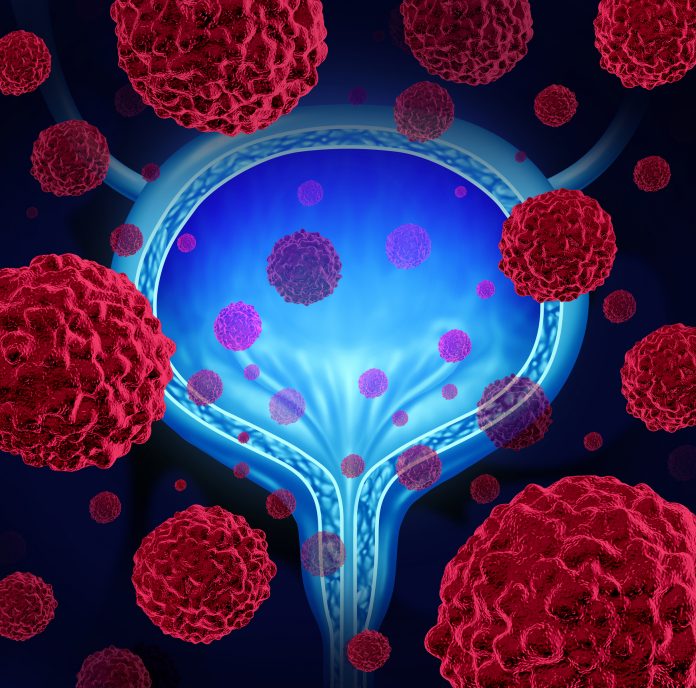
Bladder cancer is among the most common malignancies worldwide and occurs four times more often in men than women. Tobacco use remains the main environmental risk factor, yet the biological reasons behind these disparities have been elusive.
A study published in Nature by teams at IRB Barcelona, led by Núria López-Bigas, PhD, and Abel González-Pérez, PhD, and the University of Washington, led by Rosana Risques, PhD, reveals how smoking and sex shape the evolutionary landscape of healthy bladder tissue—well before cancer appears.
“Healthy tissues accumulate many mutations throughout life,” said López-Bigas. “But what matters is not only how many there are, but which ones manage to outgrow the others and expand into clones. We’ve seen that smoking and biological sex directly influence this process.”
Peering into mutation dynamics with new technology
Cancer begins long before the first tumor forms, as cells quietly accumulate genetic changes over decades. Only a subset of these altered cells, those that gain an evolutionary edge, expand into larger populations that may eventually give rise to malignancy.
To capture these early events, the researchers analyzed bladder samples from 45 donors, using a highly sensitive sequencing method capable of detecting rare mutations that standard genomic tools miss.
“The universe is full of stars, but you can’t see most of them without the right instrument,” said Risques. “This approach is like going from a backyard telescope to the James Webb Space Telescope—suddenly, multiple mutations become visible in healthy bladder tissue, long before a tumor exists.”
How sex and smoking shape clonal evolution
The team found that male donors showed greater clonal expansion of specific mutations in cancer-related genes, suggesting that male bladder cells are more prone to selective growth of risky mutations even before disease develops.
Smoking produced an even more striking signature. Among donors over 55, smokers harbored a high frequency of mutations in the TERT promoter, a region of DNA that reactivates the enzyme telomerase, enabling cells to escape aging and continue dividing indefinitely.
Crucially, the researchers found that tobacco not only causes new mutations but also acts as a clonal promoter—accelerating the growth of cells that already carry cancer-linked alterations.
“This is the first time we’ve directly observed such effects in healthy bladder tissue rather than in tumors,” González-Pérez noted. “It shows that the earliest stages of cancer development are already influenced by lifestyle and sex-specific factors.”
Rethinking risk and prevention
The findings suggest that cancer risk depends not just on mutation burden but on the competitive behavior of mutated clones. Certain mutations thrive under specific conditions, such as male hormonal environments or tobacco exposure, gradually reshaping the tissue’s cellular ecosystem.
By identifying which clones expand and under what circumstances, researchers may be able to refine individual cancer risk prediction or develop early detection tests based on urine sampling of exfoliated bladder cells.
“This study is only the tip of the iceberg,” said González-Pérez. “We analyzed 16 genes in the bladders of 45 people, yet we already found important differences. The same approach can be applied to other tissues and risk factors.”
Broader implications for precision oncology
The work is part of Team PROMINENT, a Cancer Grand Challenges consortium tackling fundamental questions about early tumor evolution. Beyond bladder cancer, the same framework could be used to study how environmental exposures—such as chemotherapy, pollution, or occupational chemicals—shape clonal dynamics in healthy tissues.
Ultimately, understanding why certain mutated cells gain ground may lead to strategies that interrupt this expansion before malignant transformation occurs, shifting oncology from reactive treatment to proactive prevention.
As López-Bigas summarized, “To prevent cancer, we must study it before it exists. Watching how normal cells evolve under real-world conditions gives us the first true glimpse of how risk takes shape.”