





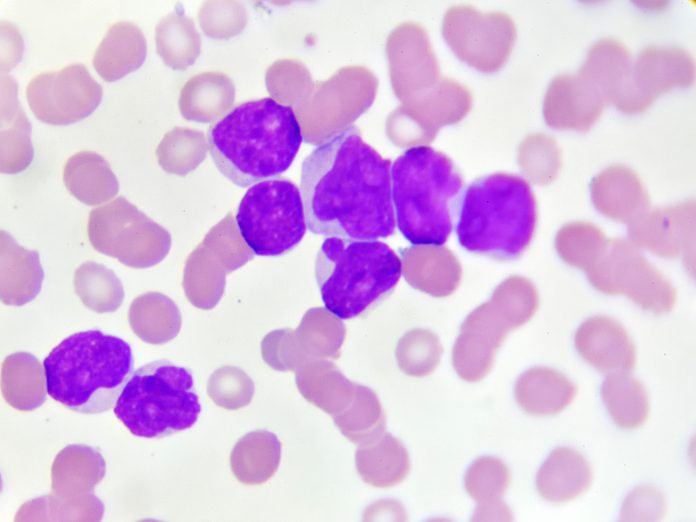
A Phase I study testing a base-edited “off-the-shelf” chimeric antigen receptor (CAR) T cell therapy for treatment of acute myeloid leukemia (AML), a fast-growing blood cancer, had mixed results in four patients with the condition.
Writing in Science Translational Medicine, the researchers report that while the treatment showed some signs of efficacy and side effects were manageable, it didn’t fully meet its primary or secondary endpoints.
“The BE-CAR33 T cells showed signs of activity and were detectable in the blood and bone marrow. Responses were encouraging, but deeper clearance of AML would have been better,” lead author Waseem Qasim, a professor at UCL Great Ormond Street Institute of Child Health in London, told Inside Precision Medicine.
First-generation CAR T cell therapies have been approved to treat certain blood cancers for the last nine years. These therapies use a patient’s own T cells, engineered to target cancer, which limits their use in sick or heavily pretreated patients.
BE-CAR33 is one of several next-generation CAR T cell therapies made with donor T cells. Donor T cells can be rejected in the same way as a transplanted organ, but BE-CAR33 T cells were made safer using base editing to disable three genes to prevent organ rejection, immune attack on the cells themselves, and evasion by the leukemia.
This builds on the team’s earlier work to treat a different leukemia type, extending “off-the-shelf” universal donor-cell approaches to AML, which has historically resisted CAR T cell therapy success due to having shared antigens with healthy bone marrow.
“Previously, we applied similar base editing techniques to treat T cell leukemia. This new study aimed to extend the approach of using ready-made, off-the-shelf CAR T cell therapy for AML,” said Qasim.
“That’s a much more difficult target because the surface flags targeted by the CAR T cells are less consistent and can change. This is the first time in the U.K. a study has targeted a flag called CD33.”
Overall, three children and one adult with relapsed AML received the BE-CAR33 T cell therapy before a planned stem cell transplant, the standard therapy for AML.
While no acute infusion-related toxicities occurred, the therapy caused expected but significant side effects, including cytokine release syndrome, low blood cell counts, and, in one patient, a grade 3 neurotoxicity and an over-activated inflammatory state. This meant the primary endpoint of establishing the safety of this therapy was not completely met.
The secondary study objectives were to determine anti-cancer efficacy and to assess disease-free and overall survival, and how successfully the new, healthy blood-forming cells from a donor take over and start making blood cells again after a transplant.
The secondary outcomes were mixed. Half the patients had a low enough disease burden 21 days after the treatment to proceed to a bone marrow transplant, but long-term outcomes were poor overall. The engineered cells were detectable in blood and marrow after infusion and were then successfully eliminated by conditioning chemotherapy ahead of transplant, with no lasting off-target safety issues.
Although the results of this study could have been better, the researchers say they provide important information to guide future studies and show this kind of treatment approach is feasible.
“I think for AML, we will need to target multiple surface markers—alongside CD33. Suitable flags might include CD7 or CD38 and other proteins,” said Qasim.
“Next stage studies will combine BECAR33 with other cells for a combination-approach tailored to an individual patient’s disease.”