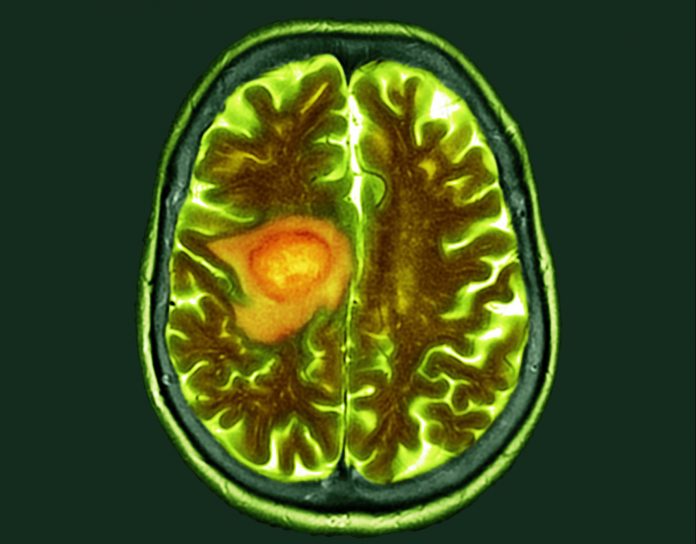
Researchers have identified an enzyme target that could enable future treatments to stop the growth of glioblastoma. The study, published in Science Advances, presents a promising approach to fight a form of brain cancer for which new molecular targets are urgently needed.
“Glioblastoma is the most lethal primary brain tumor, with a median survival of only 12–16 months from diagnosis despite extensive treatments,” said Huali Su, PhD, a researcher at the Ohio State University Comprehensive Cancer Center and first author of the study. Su and colleagues stated that, “Despite extensive research and clinical tests, the therapy for glioblastoma has shown no substantial changes over the past 20 years. The lack of progress primarily stems from our incomplete understanding of glioblastoma’s complex biology.”
The novel enzyme target identified in the study is part of the hexosamine synthesis pathway, which is involved in the process of protein and lipid glycosylation that some tumors rely on to support rapid growth. This pathway is known to be upregulated in many types of cancer and has recently emerged as a potential target for the development of new cancer treatments. However, more research is needed to fully understand this pathway and identify which enzyme targets are the most effective when it comes to inhibiting tumor growth.
Most studies to date have focused on the rate-limiting enzyme of the hexosamine synthesis pathway, known as glutamine-fructose-6-
Glioblastoma tumors were found to resist GFAT1 inhibition by relying on an alternative enzymatic pathway to restore hexosamine synthesis. The new target identified by the researchers, called phosphoglucomutase 3 (PGM3), was able to circumvent this by simultaneously inhibiting both hexosamine synthesis pathways, thereby disrupting the mechanism of resistance and effectively suppressing glioblastoma growth.
“Blocking the PGM3 enzyme can break the connection between sugar and fat creation in cells, which helps stop tumors from growing,” said Delian Guo, PhD, director of the Center for Cancer Metabolism at the Ohio State University and lead author of the study. “By targeting this enzyme, we can develop more effective treatments for glioblastoma, a brain tumor with very few effective treatment options.”
In mouse models of glioblastoma, targeting PGM3 effectively suppressed tumor growth and prolonged their median survival from 23 to 29 days. The results also revealed that PGM3 is upregulated in over 83% of tissue samples from patients with glioblastoma, making it an attractive treatment target.
“This approach holds promise not only for glioblastoma but potentially for other cancers,” wrote the authors. In particular, tumors that rely on high levels of hexosamine production to grow would be ideal targets. Inhibiting PGM3 has been shown to suppress tumor growth in breast and pancreatic tumors, as well as some forms of lung cancer. However, the authors noted that the variance observed among hexosamine synthesis enzymes in different types of cancers underscores that there is no single universal target within this pathway and highlights that a precision medicine approach will be key when selecting the right target for each cancer type.