





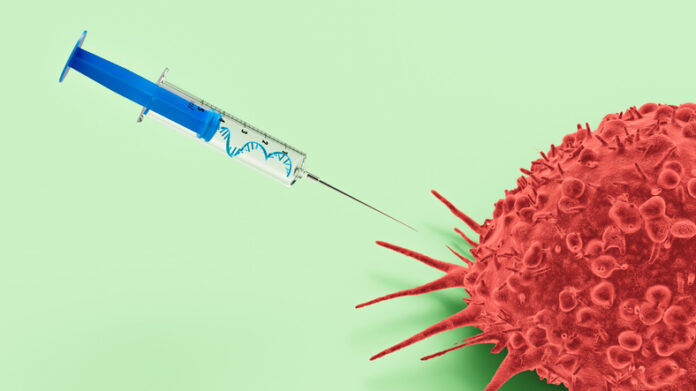
Results from the Phase IIb KEYNOTE-942 trial reveal that adding a personalized mRNA vaccine to standard immunotherapy after surgery can reduce the five-year risk of recurrence and death by 49% among patients with advanced melanoma. These findings were presented today at the annual meeting of the American Society of Clinical Oncology and published in the Journal of Clinical Oncology.
“Our study offers strong evidence to melanoma patients that intismeran vaccine therapy, when used in combination with immunotherapy, can demonstrably reduce their risk of having their cancer return and improve clinical outcomes,” said Janice Mehnert, MD, professor in the department of medicine at NYU Grossman School of Medicine and associate director of clinical research at Perlmutter Cancer Center.
Melanoma is one of the most common forms of cancer. Although immunotherapies like pembrolizumab (Keytruda) have significantly improved outcomes for melanoma patients, this cancer is still known for its ability to evade the immune system and become resistant to treatment.
Developed by Moderna, intismeran autogene is an mRNA cancer vaccine made specifically for each patient. The bespoke therapy is created by screening tumor samples for 34 neoantigens that can be leveraged to strengthen the immune system’s response against tumor cells and enhance the efficacy of immunotherapy.
The KEYNOTE-942 trial recruited 157 patients with advanced stages of melanoma and at high risk of recurrence who were randomized to either receive standard pembrolizumab immunotherapy, or a combination of pembrolizumab and intismeran. Since the treatment was administered after surgery, intismeran was individually manufactured for each patient based on an analysis of their resected tumor.
After five years, 68.8% of patients treated with the combination therapy remained alive and cancer-free, compared to 49.1% for those who received standard treatment. The addition of personalized vaccines also reduced the risk of developing a distant metastasis by 59%.
“Now with five years of follow-up data, today’s results highlight the potential of a prolonged benefit of the intismeran autogene and Keytruda combination in patients with resected high-risk melanoma,” said Kyle Holen, MD, senior vice president and head of development, oncology and therapeutics at Moderna. “We continue to invest in our platform in oncology because of encouraging outcomes like these, which illustrate mRNA’s potential in cancer care.”
A Phase III clinical trial is already underway to confirm the efficacy of intismeran as a first line therapy for melanoma in combination with pembrolizumab. Additional studies are looking into the effects of the cancer vaccine in other types of cancer, including non-small cell lung cancer, bladder cancer, and renal cell carcinoma.
“Our findings also serve as encouragement to cancer researchers globally that mRNA vaccines like intismeran could work well in combination with immunotherapy for other cancers whose high rates of mutations have proven difficult to target,” said Mehnert.