





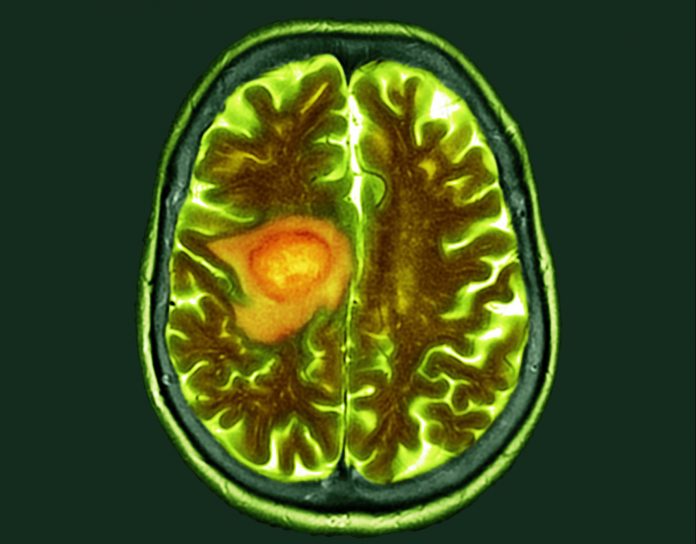
Researchers at the University of Michigan in Ann Arbor, Michigan, U.S., have discovered that changes to the diet could be a new avenue to slow down the rapid growth of glioblastoma.
Glioblastoma is the most aggressive and deadliest form of brain cancer, affecting 0.59 to 5 per 100,000 individuals worldwide. It is difficult to treat due to its invasive growth patterns, which make complete surgical removal impossible. Moreover, the brain’s blood-brain barrier makes it hard for drugs to access the tumor, while the cancer itself has the ability to suppress the immune system, preventing the body from attacking it.
Its abilities to aggressively grow, avoid standard-of-care options, and become treatment resistant have led researchers worldwide to study other treatment avenues for glioblastoma.
In their study, published in the journal Nature and titled “Rewiring of Cortical Glucose Metabolism Fuels Human Brain Cancer Growth,” the University of Michigan researchers compared how glioblastoma cells use glucose versus how healthy brain cells use glucose.
To understand how the metabolism of brain tumor cells differs from healthy cells, the team infused glucose into patients with high-grade brain tumors and into mice with glioblastomas in their brain. The glucose was isotope-labeled, allowing the researchers to track how it was processed by the cells.
The researchers’ findings show that the cells in healthy brain tissue use sugar to generate energy and fuel important physiological processes, such as the synthesis of neurotransmitters. Glioblastoma cells, on the other hand, downregulate these physiological processes, focusing instead on the use of glucose to generate molecules, such as nucleotides, which are essential for tumor growth and invasion.
“It’s a metabolic fork in the road,” explained Andrew Scott, PhD, a research scholar in the department of radiation oncology and the Rogel Cancer Center at the University of Michigan. “The brain channels sugar into energy production and neurotransmitters for thinking and health, but tumors redirect sugar to make materials for more cancer cells.”
Moreover, the researchers observed a difference in how healthy cells versus brain cancer cells accessed amino acids, which are essential for building proteins. While healthy brain cells use glucose to generate amino acids, brain cancer cells seemed to pull the necessary amino acids from the surrounding blood, so as not to have to produce amino acids themselves.
This finding led the researchers to wonder if by lowering the availability of specific amino acids in the blood, they could prevent glioblastoma tumor growth. To test this hypothesis, mice with glioblastoma were given amino acid-restricted diets.
“We altered the diet in mouse models and were able to significantly slow down and block the growth of these tumors,” said co-senior author Daniel Wahl, MD, PhD, associate professor of radiation oncology at the department of radiation oncology and the Rogel Cancer Center, University of Michigan. “Our study may help create new treatment opportunities for patients in the near future.”
Co-Senior author, Deepak Nagrath, PhD, professor of biomedical engineering at the Rogel Cancer Center, University of Michigan, explained in more detail: “When we got rid of the amino acids serine and glycine in the mice, their response to radiation and chemotherapy was better and the tumors were smaller than the control mice that were fed serine.”
The researchers believe that these findings, in combination with standard-of-care treatments, could benefit glioblastoma patients in the future. The team is now working on starting clinical trials to observe whether lowering blood serine levels with specialized diets could help treat glioblastoma.