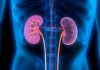
Even with the small, but exciting advances in pig-to-human kidney transplants, the demand for organs will greatly outstrip availability for some time. Now, a Canadian team has developed a tool to help overcome one of the challenges in this process—evaluating kidneys before they are used as transplants.
Their data suggest that adding the team’s “H-scan” to standard ultrasound workflows could provide a safe, rapid, and easy-to-perform method for accurate quantification of at least one key feature—kidney fibrotic burden—and thus allow better prediction of post-transplant renal outcomes.
One of the most common forms of chronic kidney damage is fibrotic injury, which arises when healthy kidney tissue is replaced with a pathologic matrix and other changes that cause progressive loss of kidney function. Fibrosis can thus be a useful marker of irreversible renal damage and an important predictor of ongoing kidney injury. As such, the ability to accurately measure donor-derived fibrotic burden could have major implications on how donor kidney selection and allocation are performed.
But currently, clinicians have a limited ability to assess kidney fibrotic burden.
The report appeared in Nature Medicine. The lead author is Eni Hysi, PhD, associate professor, Department of Medical Biophysics, Temerty Faculty of Medicine, University of Toronto.
There is a huge unmet need here. The United States alone does an estimated 25,000 kidney transplants each year, according to the National Kidney Foundation. However, an estimated twelve people die each day needing a transplant.
The kidney donor risk index (KDRI), developed and validated in 2009, assigns each deceased donor a KDRI, and a corresponding kidney donor profile index (KDPI) score that ranges from 0 to 100%, with higher KDPI scores generally reflecting poorer-quality kidneys.
Patients who receive kidneys from donors with KDPI >85% have poorer renal outcomes, on average, compared with those receiving kidneys with KDPI ≤85%. However, the distinction between KDPI >85% and ≤85% kidneys remains imprecise, with some KDPI >85% kidneys having an average healthy lifespan that exceeds that of kidneys with lower KDPI scores. Likewise, although a KDPI ≤85% kidney on average lasts longer than those with KDPI >85%, some KDPI ≤85% kidneys progress to end-stage kidney disease.
Currently, kidney biopsies are often performed in the United States at the time of procurement, with histologic analysis of chronic donor-derived renal injury, such as scarring, used to further assess donor kidney quality. Unfortunately, the authors say, this histologic analysis does not appear to improve transplant outcomes and may increase kidney discard rates.
To address this problem, “We developed a quantitative algorithm, called renal H-scan, that can be added to standard ultrasound workflows to quickly and noninvasively measure renal fibrotic burden in preclinical animal models and human transplant kidneys,” the Canadian team wrote.
They added, “Furthermore, we provide evidence that biopsy-based fibrosis estimates, because of their highly localized nature, are inaccurate measures of whole-kidney fibrotic burden and do not associate with kidney function post-transplant. In contrast, we show that whole-kidney H-scan fibrosis estimates associate closely with post-transplant renal function.”
The demand for kidneys vastly outstrips the supply of available donors. As of December 2023, over 93,000 patients were waiting for a kidney transplant in the United States alone, leading to a median wait time of roughly four years. New tools such as whole-kidney H-scan could help make more kidney transplants successful.