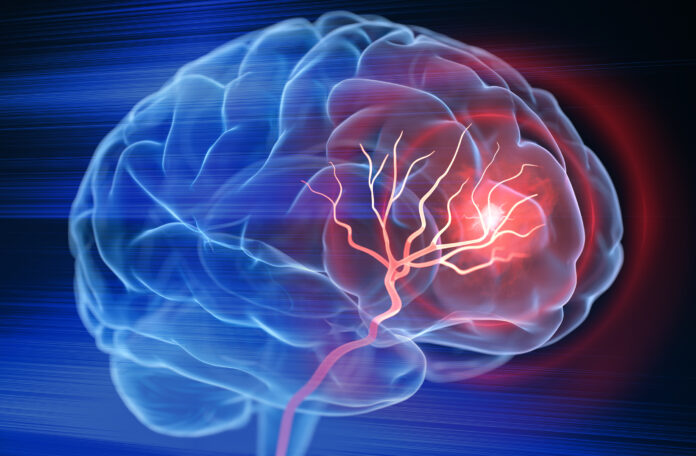
Researchers at the University of Cambridge have discovered a drug they say can significantly reduce brain damage that can occur in stroke patients after blood flow is restored to the brain. The new compound, acidified disodium malonate (aDSM), was shown in mouse models to reduce damage to brain tissue caused by ischemia–reperfusion injury (IRI) by around 60%. These findings are published in the journal Cardiovascular Research.
“Stroke is a devastating disease. Even for those who survive, there is a significant risk of damage to the brain that can lead to disabilities and a huge impact on an individual’s life. But in terms of treatment, once the stroke is happening, we have only limited options,” said senior study author Thomas Krieg, MD, a professor of experimental cardiovascular medicine at the University of Cambridge.
One in four people is projected to suffer a stroke in their lifetime, and quick restoration of blood flow, which is increasing provided by the procedures mechanical thrombectomy or pharmacological thrombolysis, is essential to minimizing damage to brain tissue.
Mechanical thrombectomy (MT), the current standard treatment for large-vessel ischemic stroke, is a catheter-based intervention used to physically remove the clot. In MT, a catheter is threaded through a blood vessel, often via the groin or arm, which is guided to source of the obstruction, where the clot is removed. But this sudden return of blood flow can lead to IRI, with the result being that only about 10% of patients treated via MT leave the hospital without some form of neurological injury.
In previous studies, the team in the Kreig lab identified a mechanism contributing to IRI: the rapid oxidation of succinate, a chemical that accumulates in the brain during oxygen deprivation. Upon reperfusion, succinate is oxidized in mitochondria, triggering the production of damaging reactive oxygen species (ROS) through reverse electron transport (RET). The team had also shown in earlier work that disodium malonate (DSM) inhibited succinate oxidation, though its potential for clinical use was limited by poor uptake by cells.
In this new work the researchers have solved that problem by acidifying DSM to create aDSM while allowed the molecule to cross the blood-brain barrier more efficiently, especially via the monocarboxylate transporter 1 (MCT1). Administered intra-arterially just before reperfusion during MT, aDSM significantly reduced ROS production and associated brain damage.
“We discovered in our labs that we can get malonate into cells very quickly by lowering the pH a little, making it a bit more acidic, so that it can cross the blood-brain barrier better. If we inject it into the brain just as we’re ready to reperfuse, then we can potentially prevent further damage,” said Mike Murphy, PhD, a professor of mitochondrial redox biology at Cambridge.
To demonstrate the utility of aDSM, the researchers used a mouse model of transient middle cerebral artery occlusion (tMCAO), developing a method to simulate MT and deliver aDSM intra-arterially through the internal carotid artery. Their results showed that brain infarct volume decreased by approximately 60% at 24 hours, as measured by MRI, and neurological function improved.
Significantly, the protective effect of aDSM was also confirmed in aged and diabetic obese mice, which point to its potential for development as a therapeutic agent for humans.
While promising, one limitation of the study was the inclusion of only male mice in their research, though the team noted their intention to include female mice in follow up work.
Another limitation arose when ischemia reached 60 minutes, reducing the effectiveness of aDSM, compare with eschemic insult that only lasted 30 minutes. The researchers attributed this to a diminished salvageable brain region, or penumbra, which aligns with clinical knowledge that timing and imaging-based assessment are critical in patient selection for thrombectomy. “It is important to consider that in human MT, patient selection is not only dependent on the time since symptom onset, but also on the presence of a salvageable penumbra,” the researchers wrote.
As a result of this current research, the Cambridge team founded Camoxis Therapeutics with support from Cambridge Enterprise to advance aDSM toward human clinical trials.