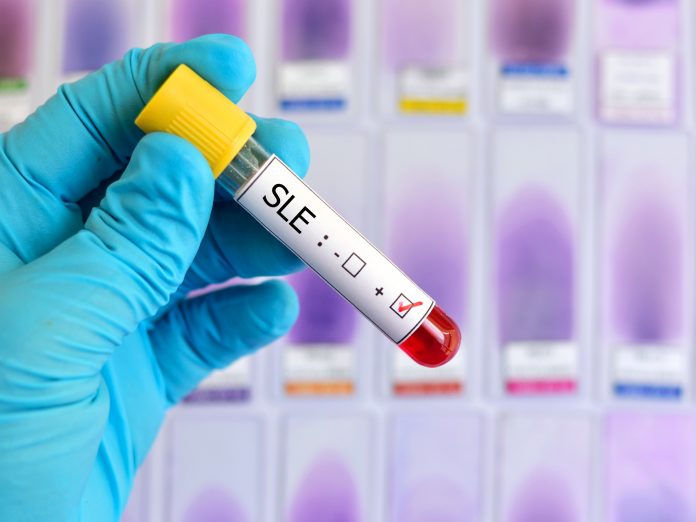
A new approach to treating Systemic lupus erythematosus (SLE) could help solve one of the biggest challenges in managing the autoimmune disease: controlling the immune cells that attack healthy tissues without weakening the body’s defenses against infection. Researchers at the University of California, Riverside and City of Hope have uncovered a molecular mechanism that may help explain why certain immune cells become destructive in lupus. Their findings point to an unexpected culprit: prolactin, a hormone best known for stimulating breast milk production but also involved in regulating immune activity.
By targeting an abnormality in how immune cells respond to prolactin, the researchers reduced harmful immune activity and prevented kidney damage in mice, while largely sparing healthy immune cells. The findings, published in Experimental and Molecular Medicine, suggest a more selective way to treat SLE, a chronic disease that can damage the kidneys, joints, skin, and other organs.
Lupus treatments have improved considerably, but many still rely on suppressing immune activity. Even newer approaches that target B cells, which produce the antibodies responsible for much of the tissue damage, can affect healthy immune cells. Experimental CAR T-cell therapies have shown promise in patients with difficult-to-treat lupus, although their complexity, cost, and potential side effects present challenges. Rather than eliminating entire populations of immune cells, the new strategy targets a molecular abnormality that helps make them destructive.
Scientists have known for years that higher prolactin levels are associated with more active lupus, but attempts to reduce the hormone have produced inconsistent results. The new research suggests the problem may lie not simply in the amount of prolactin in the body, but in the receptors through which it acts. These receptors come in long and short forms that trigger different signals inside cells. In immune cells from patients with lupus, the researchers found an unusually high proportion of the long form, which promotes inflammatory activity.
To correct the imbalance, the team developed short synthetic DNA molecules called splice-modulating oligonucleotides. These molecules alter how the receptor’s genetic instructions are processed, reducing production of the long form while preserving or increasing the shorter forms. Unlike conventional antibodies and receptor-blocking drugs, which cannot readily distinguish between the two forms because their external structures are identical, the experimental treatment changes which receptor versions cells produce.
Using immune cells collected from patients with lupus and mouse models of the disease, the investigators found that treatment reduced abnormal B-cell populations, suppressed inflammatory signaling associated with type I interferons, and diminished molecular features linked to harmful autoantibodies. In lupus-prone mice, the treatment also prevented abnormalities in the kidney’s filtering structures, a significant finding because lupus nephritis is among the disease’s most serious complications.
The results remain preclinical. The human experiments involved cells studied outside the body, collected from adult women who had previously received lupus treatment.