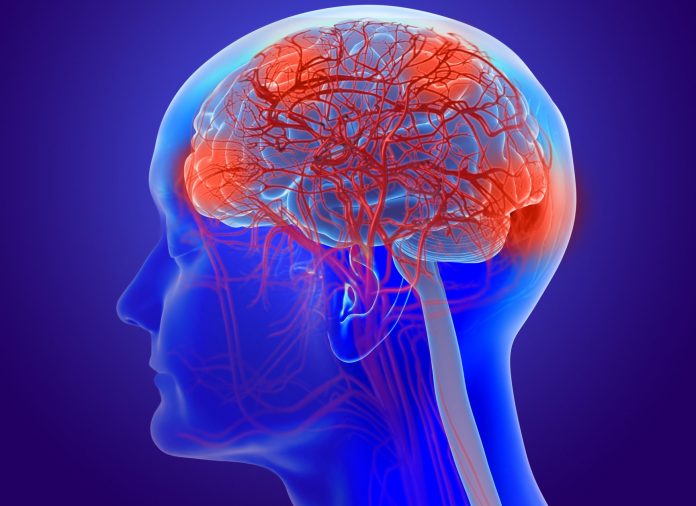
Researchers at UCLA Health have uncovered how inflammation in brain blood vessels exacerbates damage in vascular dementia (VaD). Their study demonstrated that targeting this process with a repurposed drug currently in clinical trials for treating psoriasis can promote brain repair and functional recovery in a mouse model of VaD.
The research, headed by S. Thomas Carmichael, MD, PhD, professor and chair Neurology at the David Geffen School of Medicine at UCLA, combined studies in the newly developed mouse model and human data to identify conserved dysregulated intercellular pathways in both species. The results pinpointed a critical signaling pathway that could point to the first effective treatment for vascular dementia.
Senior author Carmichael and colleagues reported on the study in Cell, in a paper titled “Deconstructing the intercellular interactome in vascular dementia with focal ischemia for therapeutic applications.” In their paper the team stated, “This study reveals intercellular signaling targets and provides a foundation for developing innovative therapies for VaD.”
Vascular dementia is the second leading cause of dementia after Alzheimer’s disease (AD), accounting for approximately 25% of all dementia cases, the authors wrote. Vascular dementia also commonly co-occurs with Alzheimer’s disease, with 84% of elderly individuals exhibiting morphological features of VaD alongside AD pathology, which is suggestive that there are potential additive or synergistic interactions between the two disorders. However, the authors pointed out, “Despite its high prevalence and profound impact on global health, the underlying mechanisms of VaD remain poorly understood.”
There are currently no direct treatments for VaD, the team added, and existing symptomatic therapies, including cholinesterase inhibitors and memantine, show limited effectiveness and do not target the underlying vascular pathology. “These knowledge gaps highlight the urgent need for comprehensive studies to identify therapeutic targets and validate their translatability in animal models that accurately replicate the diverse etiologies observed in human VaD,” they said.
A key problem is that the brain damage expands from initial areas to become larger over time. “A major barrier to advancing VaD research is the incomplete understanding of cell-type-specific responses within the neurovascular unit (NVU)—a dynamic interplay of multiple cell types,” the investigators stated. For their reported study the team sought to identify what happens in the brain in these areas of expansion. To do this, they identified all the molecules that communicate among the cells of the brain adjacent to the dementia lesions, and which ones are abnormally up or down in the disease compared to normal brain.
To enable their study, the team developed a mouse model of VaD that recapitulates focal white matter (WM) ischemic lesions in the most common sites of the human disease. “The mouse model offers a valuable tool for studying WM-specific pathology and its progression in VaD, bridging a critical gap between animal models and human disease,” the investigators commented. By studying the laboratory model of vascular dementia in combination with human brain study data, the UCLA team was able to precisely identify the “interactome” in vascular dementia—all the molecules that signal or interact in the cells at risk.
“We reasoned that the cell in the brain areas in which the disease expands will lose their normal signaling with each other,” said Carmichael. “In other words, the cell-to-cell interaction is disturbed in a toxic way in vascular dementia. We set out to identify these cell-to-cell interactions or the ‘interactome’ in vascular dementia.”
One molecular system jumped out as potentially significant. This system communicates between blood vessel cells and adjacent microglia, brain inflammatory cells. In vascular dementia, the enzyme CD39 and the adenosine A3 receptor (A3AR) are downregulated together in these two cell types, synergistically by aging and vessel ischemic lesion. Because vascular dementia is a disease of aging, this double finding—a downregulation with both disease and aging—signaled a possibly significant role. CD39 generates through several steps the molecule adenosine, which binds to A3AR and modifies inflammation, downregulating some of its harmful effects.
To test this CD39/A3AR system as a possible drug target for treating vascular dementia, the group utilized a drug that is in clinical trials for psoriasis. “To investigate whether increasing the affected CD39-A3AR signaling is beneficial to VaD recovery, piclidenoson, an A3AR-specific agonist, was delivered either acutely or in a delayed manner after VaD induction,” the team explained. When given to their mouse model, the drug promoted repair of brain tissue and recovery of memory and gait functions.
“The most exciting finding was that delayed intervention still worked,” said first author Min Tian, PhD, a postdoctoral scholar at UCLA Health. “This is crucial because vascular dementia is often diagnosed late. By targeting the crosstalk between blood vessels and brain cells, we’re addressing the root cause of damage, not just masking symptoms.” As the authors pointed out, “This appears to be the only known finding of a drug that reduces lesion progression or enhances tissue repair in such a delayed treatment…Prior to this work, no pharmacological strategy had been shown to promote tissue repair in the VaD brain; these findings open a promising avenue for therapeutic development.”
While the results are promising, further studies are needed before human trials can begin. The team is now optimizing dosing and exploring biomarkers to track the therapy’s effectiveness.