An experimental “living medicine” made from genetically engineered bacteria has been able to reduce the thickness of antibiotic-resistant Pseudomonas aeruginosa biofilms in the lungs of pigs, showing promise in tackling one of the most common and life-threatening hospital infections. The findings, published this week in eBioMedicine, mark the first time the experimental therapy has demonstrated efficacy in pigs, whose lungs are more similar to human lungs than those of mice.
“Our study is part of an emerging field of medicine known as live biotherapeutics,” said Irene Rodríguez-Arce, PhD, staff scientist at the Centre for Genomic Regulation (CRG) in Barcelona. “In this case we’ve taken a bacterium naturally adapted to the lung and reprogrammed it so that it delivers therapeutic molecules instead of causing damage. It’s a Trojan horse strategy against disease.”
Patients in intensive care who cannot breathe independently require mechanical ventilation. However, inserting a tube into the windpipe can disrupt the lungs’ natural defenses, allowing bacteria to colonize it and develop biofilms that protect them against antibiotic treatment. Among the bacteria that cause ventilator-associated pneumonia (VAP), P. aeruginosa is particularly concerning because it can develop resistance to multiple antibiotics.
“Antibiotic resistance is a silent pandemic we see affecting intubated patients every day and Pseudomonas aeruginosa is among the hardest infections to clear. Our work represents a different line of attack, and one we badly need,” said Antoni Torres, MD, professor of medicine and head of the respiratory intensive care unit at Hospital Clínic in Barcelona.
The treatment, which is inhaled through a nebulizer, uses a modified version of Mycoplasma pneumoniae, alive bacterium that normally causes mild respiratory infections. The researchers genetically engineered it to produce enzymes that break down the sugars holding bacterial biofilms together, as well as antimicrobial molecules that specifically target P. aeruginosa.
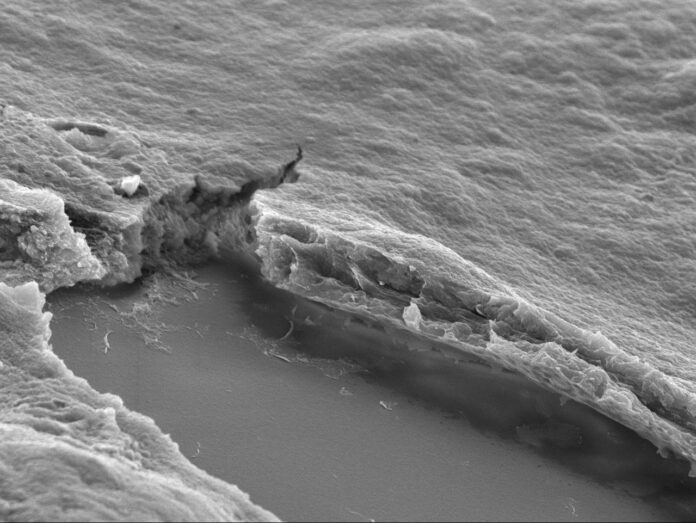
In pigs, this “living medicine” reduced the thickness of bacterial biofilms growing on endotracheal tubes by about forty percent. Results also showed a decrease in the amount of P. aeruginosa in lung tissue and airway samples, along with reduced levels of inflammatory markers in the lungs. The treatment did not significantly disrupt the overall diversity of bacteria in the animals’ airways.
Although no treatment-related damage to lung tissue was identified, one animal receiving the nebulized therapy died following a suspected anaphylactic-like reaction. The authors say this event requires further investigation before the treatment can progress towards human trials.
The team is now exploring whether combining the living medicine with intravenous antibiotics could improve its effectiveness. In parallel, they are also developing other versions of the engineered bacterium designed to tackle other conditions including pulmonary fibrosis and lung cancer.
“I am confident that with modifications to the bacterial chassis’ payload, we could completely dissolve the biofilms on the surface of endotracheal tubes and clear P. aeruginosa infections entirely,” said Luis Serrano, PhD, research professor at ICREA.