





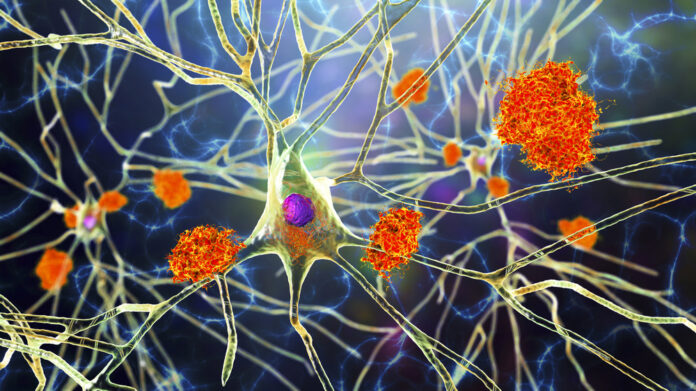
For the first time, scientists have shown that it may be possible to replace neurons lost to Alzheimer’s disease and other neurodegenerative conditions. In a study published today in Cell Biomaterials, researchers at the University of South Carolina reprogrammed astrocytes into neurons without genetic modification, restoring memory and learning abilities in mice.
Neurodegenerative disorders remain largely incurable partly because the adult brain lacks the capacity to replace lost neurons. Existing treatments for conditions like Alzheimer’s can slow down disease progression, but cannot restore neurons that have already been lost. By harnessing the plasticity of astrocytes and converting them into functional neurons directly within the brain, the USC team’s approach could offer a new strategy to alter the course of neurodegenerative disease.
“The new neurons can become mature and survive,” said Peisheng Xu, PhD, professor of pharmaceutics at the University of South Carolina. “We also confirmed much higher neuron density in the brains of treated mice.”
Xu’s team had previously developed a nanoparticle-based system called Nano-ERASER that delivers antibodies against a target protein, triggering its rapid degradation inside the cell. In the current study, the system was used to selectively deplete a protein within astrocytes called PTBP1, prompting their conversion into neurons.
The nanoparticles are engineered to cross the blood-brain barriers and selectively enter astrocytes, leaving neurons and other brain cells largely untouched. Once inside the astrocytes, the nanoparticles release antibodies that cause a rapid but temporary decrease in PTBP1 levels.
This approach offers significant advances over gene editing strategies, which may be difficult to restrict to a specific cell type, and can raise concerns about permanent genomic changes, chronic gene expression, or unwanted immune responses. Those risks can become especially problematic for patients with aged or diseased brains.
“We hope this can be more effective and also safer,” said Xu. “We don’t need to worry about the potential side effects caused on the genetic level.”
The researchers first tested the Nano-ERASER system on human astrocytes and brain organoids designed to model Alzheimer’s disease. In both models, the treatment reduced PTBP1 levels and prompted astrocytes to convert into functional neurons.
In mouse models of Alzheimer’s, the treatment increased neuron density while reducing neuroinflammation and amyloid beta accumulation. Over the course of several weeks, behavioral tests also showed that the treated mice recovered learning and memory skills they had previously lost.
“After just two injections, these mice became smarter,” Xu noted. “Even after one injection, we already saw these mice’s behavior differ from that of the nontreated ones.”
The findings mark a critical step forward in regenerative neuroscience, particularly given that previous research has debated whether suppressing PTBP1 alone is sufficient to reprogram astrocytes into fully functional neurons within the mammal brain. The researchers say the study provides a potential roadmap toward therapies that could one day repair neurons lost to neurodegenerative disease. Next, the team plans to evaluate the platform’s longer-term efficacy and safety, with studies in nonhuman primates planned before the approach can be considered for clinical trials.
“If we can advance it to the clinic, then we can have hope for patients with Alzheimer’s disease,” said Xu.