




In the fast-evolving landscape of precision oncology, a new player has entered the stage with ambitions as bold as its origins. Seattle-based Lila Biologics announced its official launch this week alongside a high-profile global licensing and multi-target collaboration with Eli Lilly and Company to discover and develop targeted radioligand therapies (TRTs) for solid tumors.
The news marks not only the arrival of another spinout from the Institute for Protein Design (IPD) at the University of Washington—home to the celebrated protein engineer and Nobel laureate David Baker, PhD—but also a pivotal moment for a nascent company that has spent just two years building its scientific platform.
The collaboration marks not only Lila’s public debut but also what co-founders Anindya Roy, PhD and Jake Kraft, PhD, describe as their “Hello world” moment. It is a signal that the company is ready to bring its two AI-driven platforms for designing TRT for solid tumors and long-acting injectable (LAI) monoclonal antibodies for non-oncology indications into the real-world challenge of creating effective, safe medicines.
From rural India and Wichita to Seattle biotech
The story of Lila Biologics begins in two very different places: Roy grew up in rural India, and Kraft grew up in Wichita, Kansas.
Roy’s journey to science started with an undergrad in chemistry in India, followed by a move to the United States in 2008 to pursue a PhD. Roy, who is Lila’s CSO, told Inside Precision Medicine, “I did my PhD at the interface of chemistry and biology but primarily focused on protein engineering. After that, I moved to David Baker’s group for a postdoc, where I spent a lot of time learning new computational tools as well as some preclinical translation for the project that I was working on.”
Roy participated in IPD’s Translational Fellows Program for four years, which focuses on transforming laboratory breakthroughs into potential therapeutics. “Towards the end of my postdoc, I was debating what to do with my career, and the project I was working on was exciting from a translational standpoint,” said Roy. “I spent four years in an incubation program, working on translating some of the things that you developed. That’s where I met Jake, and we decided to create a spin-off project called Lila.
Kraft was born and raised in America’s Heartland, latching onto science and math in high school in his hometown of Wichita. “I had a senior science teacher, and we did liquid chromatography—separation of fatty acids and French fries,” Kraft told Inside Precision Medicine, laughing. “I wrote an article on that. She was very encouraging.”
That support carried him to the University of Kansas for a chemistry degree and eventually to the University of Washington for a PhD in pharmaceutical sciences, where Kraft got his introduction to biotechnology. “I learned how essential pharmacokinetics and pharmacodynamics are so critical from the start of preclinical work all the way through post-marketing and approval,” said Kraft, of the training that would prove fundamental to Lila’s expertise on fine-tuning pharmacokinetics.
Kraft later joined the lab of Neil King, PhD, at IPD as a postdoc, working in the same environment that brought Roy to Seattle. King, who was a Baker postdoc, now runs a structure-based vaccine design lab, which shares space on the same floor as Baker’s in the IPD. King spun out Icosavax, a self-assembling nanoparticle vaccine platform, in 2017, which AstraZeneca bought for $1.1 billion in December, even after its virus-like particle (VLP) vaccine candidate for SARS-CoV-2, IVX-411, was discontinued after disappointing results in early clinical trials.
From those shared hallways, Roy and Kraft connected around a common idea: that new computational protein design tools could be pushed far beyond binder discovery into actual medicines.

A different kind of IPD spinout
The IPD is a hotbed of biotech spinoffs. But Roy and Kraft argue that Lila is carving out a distinctive path.
Since many people can design high-affinity binders, Kraft clarified, “We like to describe it as we’re very focused on imparting drug-like properties into these binders, really focusing on the pharmacokinetics, the developability, the stability, and really focusing on not only the target but also potential safety and toxicity, and so really zoning in on the drug-like properties of these molecules.”
When you look at the news and how many AI-driven businesses are popping up these days, it can be a bit overwhelming or “hypey,” Roy continued. “We take a little more pragmatic view of that. Binder design is not something that we particularly focus on anymore because it is almost a solved problem. Coming up with another new AI model to design a new binder is not something that translates into actually meaningful medicine.”
Instead, the founders emphasize preclinical optimization and molecular properties. “What we spent our time on in the last two years is that through a lot of preclinical optimization, we can actually come up with a set of molecular properties that we can include during the binder design for on-stream optimization,” Roy continued. “We don’t take that much time optimizing the molecule that is fit to the TPP and we seem to be cracking that for both targeted radiotherapy and the LAI and we are really proud and we’re thinking of actually making our binder design program actually include all those molecular properties and all those rules from the get-go from the in silico screening and we have really good success so we’re really excited.”
This focus has led to Lila Biologics’ two platforms: an industry-first targeted radiotherapy platform that uses AI-powered de novo mini proteins and an AI-driven LAI monoclonal antibody platform.
A new TRT drug modality
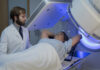
TRT is an emerging cancer treatment that combines a molecule capable of seeking out tumors with a radioactive isotope to deliver lethal doses directly to cancer cells while sparing healthy tissue. It is gaining momentum thanks to recent FDA approvals and clinical successes in prostate and neuroendocrine cancers.
Kraft said, “We’re developing an entirely new drug modality for TRT, and it’s funny because David Baker pioneered these de novo mini proteins, computationally designed mini proteins. And we believe that target radiotherapy is the perfect application for these de novo mini proteins because you have so much control over tuning their properties for the body.”
That tunability, he argues, is what excites pharma partners like Lilly. “We can exquisitely control basically their blood pharmacokinetics to really maximize tumor uptake and persistence but rapid clearance from the body,” Kraft explained. “The TRT field is really zooming in on small molecules and peptides. With our de novo mini proteins, we have unprecedented selectivity to the target, which is antibody-like, but we have super rapid clearance from the body, which is why the field kind of goes to small molecules and peptides, because you want rapid in and rapid out, but you want basically sticking in the tumor. We are bringing this new drug modality to the target radiotherapy field.”
Lila also intends to go beyond crowded TRT targets like prostate-specific membrane antigen (PSMA), where companies such as ARTBIO are ahead with AB001, a PSMA-targeted small molecule labeled with the in vivo generating α-emitter lead-212.
Roy pointed out that Lila is also realistic about the supply chain. “If you look into the therapeutics in general for supply chain, lutetium is of course the first choice, and every clinical trial that is going on includes novelties and all the big, big players in the therapy,” said Roy. “Lutetium is the first choice because of the supply chain, and the actinium is coming up but I think a couple of years ago, the actinium supply chain was an issue because there was not enough.”
Indeed, RayzeBio, the radiopharmaceutical subsidiary of Bristol Myers Squibb (BMS), temporarily paused new patient enrollment in its Phase III ACTION-1 trial for the drug RYZ101 in June 2024 due to a shortage of the crucial actinium-225 (Ac225) isotope. All currently enrolled patients continued treatment, and RayzeBio has since resolved its supply constraints, with the trial resuming enrollment. The pause highlighted the broader challenges of securing rare isotopes for nuclear medicine therapies.
Building towards the clinic
With this backdrop, the collaboration with Lilly stands out as both validation and acceleration. In less than two years, Lila Biologics has gone from an idea in a postdoc program to a biotech company with two development candidates, an industry-first platform for TRT, and a marquee collaboration with Eli Lilly.
The collaboration with Lilly is a global licensing and multi-target collaboration to discover and develop novel target radiotherapies for solid tumors to hopefully impact cancer patients’ lives. Kraft explained, “Lila is bringing to the table our target radiotherapy platform that Anindya described, and our job is to basically design and develop the development candidates to deliver to Lilly development candidates. Then, Lilly will do IND-enabling and clinical development and handle the commercialization.”
Lila’s ambitions extend beyond collaborations. “We want to be known for saving lives, not just designing proteins,” Kraft said. “We aim to be in the clinic in 2027. We do have two development candidates, which I think is pretty unprecedented with the speed we’ve gone and the capital we’ve raised. And so we’re super excited to take the next phase or growth phase of Lila by doing early-stage clinical development.”
Roy addressed skepticism about the company’s youth. “One criticism we always get is that we’re so young and just don’t know how to make medicines,” said Roy. “The criticism is justified because we came from academia.”
But Kraft and Roy aren’t just talking the talk—they’re walking the walk. That knowledge and confidence go back to their roots in their core understanding of molecular properties, which they infuse into each program from the get-go.
Roy explained, “We are early stage, but we put a lot of effort into thinking about downstream development. We already have two molecules in less than two years, which is possible primarily because we consider the entire developmental path, including CMC, the most expensive part. If a molecule is an amazing binder but has some CMC or stability issues, it does not go through our pipeline. That has made us go this fast because we are so focused on making something that is actually developable in the end and doesn’t get stuck somewhere.”
As Kraft put it, “We have an amazing opportunity to be one of the first IPD companies with improved therapy. It’s the early days in the technology, and we’re really excited to translate it for patients.”