





Elizabeth Holmes promised to revolutionize blood testing with a countertop device capable of running dozens of tests within minutes from a finger-prick sample. By bringing testing into pharmacies, grocery stores, and homes, Theranos would make diagnostics faster, easier, and more accessible. The vision propelled Holmes to global fame and Theranos to a $9-billion valuation in 2015.
But former laboratory director Adam Rosendorff, MD, and employees Erika Cheung and Tyler Shultz helped expose the chasm between Theranos’s claims and capabilities, contributing to John Carreyrou’s landmark 2015 Wall Street Journal investigation and subsequent bestseller, Bad Blood. The scandal destroyed Theranos and made Holmes a symbol of fraud. Holmes, who is now serving a minimum-security federal prison sentence in Texas, has returned to the spotlight as a result of the documentary You Can See Everything, which rekindled interest in Theranos and called the company’s lofty claims into question.
But what if Theranos’s greatest technological mistake was attempting the unnecessary rather than the impossible?
A decade later, a number of companies are realizing elements of Holmes’s ambitious vision through different approaches. Babson Diagnostics offers minimally invasive blood collection with centralized analysis. Truvian Health and VitalBio are developing compact, multimodal testing platforms, while ARUP Laboratories is investigating remotely collected capillary samples.
Their approaches reveal a distinction that Theranos obscured: smaller blood samples, comprehensive testing, and decentralized analysis are separate challenges that need not be solved together. The question is which tests benefit from decentralization and whether the complexity and cost are justified.
The “drop of blood” myth
An enduring misconception surrounding Theranos is that its promise was impossible because a few drops of blood lacked sufficient biological material for comprehensive testing. Eric Olson, founder and COO of Babson Diagnostics and a former Siemens Healthineers executive, disagrees. “There’s a ton of biological content even in an extremely small sample, much smaller than a drop,” Olson told Inside Precision Medicine.
The challenge is clinical reliability. “You’re not breaking the laws of physics or chemistry in doing it,” Olson explained. “But in medical science, being possible means being able to prove not that you can run a test, but that you can do it accurately.”

Conventional laboratories collect far more blood than individual tests consume, often requiring only microliters per reaction. Theranos diluted finger-prick samples for Siemens analyzers, illustrating that smaller samples don’t require miniaturized instruments. However, low-abundance analytes and differing specimen requirements impose limits.
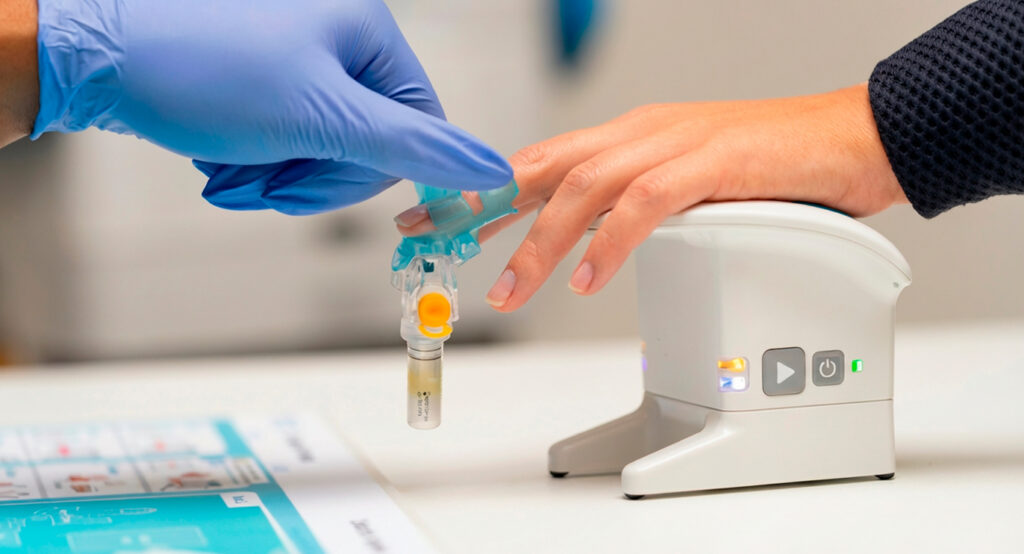
Rather than replacing established analyzers, Babson redesigned blood collection, preparation, and analysis for smaller volumes. Beginning in 2015, Olson partnered with Becton, Dickinson and Company (BD) to develop the MiniDraw Capillary Collection System, collecting approximately 435–635 microliters per tube.
Obtaining a reliable capillary sample is challenging. Hand temperature, puncture location, and excessive finger pressure can cause hemolysis, damaging red blood cells and distorting potassium measurements. “We’ve needed to develop a technology where we properly warm the hand. We puncture the finger in the right place. We squeeze the finger in a controlled fashion, where there’s a limit to the amount of force that you can apply,” Olson said.
Why bother? A 2024 Babson–BD study found most participants preferred capillary over venous draws. But collection was only part of the challenge. Babson also developed automated preparation, temperature-controlled transport, centrifugation technology to maximize sample recovery, and miniaturized assays consuming approximately 55% less material than conventional methods, according to the company. “We had to innovate the entire value chain,” Olson said. “We had to innovate the collection method, preparation method, and analytical method.”
Together, these innovations enable collection at pharmacies and grocery stores without specialized personnel and support 68 tests that Babson says it has validated against conventional venous testing. In a 2025 peer-reviewed study, researchers evaluated 20 miniaturized assays and compared capillary and conventional specimens across 39 analytes. All 20 assays correlated strongly with unmodified counterparts, while 37 analytes demonstrated equivalence between novel capillary collection and conventional venous serum. Glucose and total carbon dioxide demonstrated equivalence against other specified specimen types. The study did not evaluate Babson’s entire commercial menu.
Babson’s approach preserves centralized laboratory infrastructure while expanding collection access. It also reflects an economic calculation. Olson compared centralized testing with point-of-care instruments to “mass production versus a 3D printer.” Babson aims to retain laboratories’ economies of scale while improving convenience, although whether those benefits outweigh specialized collection, processing, and transportation costs remains an open commercial question.
The point of point-of-care
For VitalBio co-founder and chief technology officer Mounir Koussa, PhD, bringing laboratory testing into the doctor’s office is personal. His father’s blood tests revealed dangerously elevated lipids, but results arrived 48 hours later, and he missed his physician’s call. His next healthcare encounter was an ambulance ride followed by quadruple bypass surgery. “Things could have ended very differently if that triglyceride result of 2,600 had appeared on the screen while my dad was still in the office with his physician,” Koussa told Inside Precision Medicine.
Both VitalBio and Truvian Health aim to deliver results during the same visit. “We feel that with TruVerus and other technologies in the future, we should flip the visit,” Truvian co-founder and COO Dena Marrinucci, PhD, said. “You should go into the doctor’s office. The first thing that happens is you get the blood drawn. It goes on TruVerus, and by the time you’re sitting down with your doctor, he or she has your results in the medical record.”
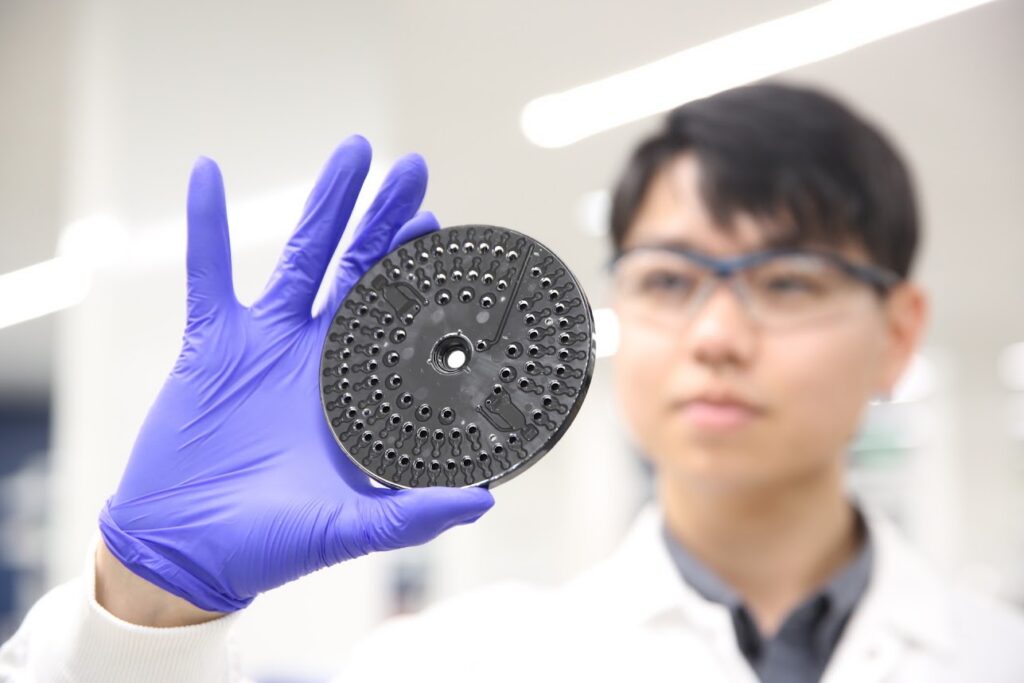
Truvian’s TruVerus integrates clinical chemistry, immunoassays, and hematology. Its TruWellness panel measures 40 biomarkers from approximately 300 microliters of blood, using established assay methods miniaturized into a disposable disc with reagent-filled microwells, three optical systems, and onboard centrifugation. Truvian’s multimodal testing platform is FDA-cleared, with 26 cleared assays and plans for continued expansion of its testing menu.
One area that TruVerus, VitalOne, and other emerging multimodal platforms have yet to incorporate is molecular diagnostics (Box 1), a capability Theranos sought to develop and for which it obtained FDA clearance for a single herpes simplex virus (HSV-1) test. The newer platforms instead prioritize routine clinical chemistry, immunoassays, and hematology, while dedicated molecular systems already serve applications such as rapid testing for strep, flu, and respiratory syncytial virus (RSV).
BOX 1. Why molecular tests are a different challenge
Routine blood tests and molecular diagnostics measure fundamentally different biological targets, often requiring distinct analytical technologies. Clinical chemistry tests measure substances such as glucose, cholesterol, and electrolytes. Immunoassays detect proteins, hormones, and other molecules using antibody-based recognition, while hematology instruments count and characterize blood cells. Molecular diagnostics, by contrast, analyze genetic material (i.e., DNA or RNA) to identify infectious pathogens, inherited variants, cancer-associated mutations, and other genetic biomarkers. Many rely on techniques such as polymerase chain reaction (PCR) or nucleic acid sequencing, which require specialized sample preparation, amplification, detection, and contamination controls.
These requirements complicate efforts to integrate molecular testing into instruments designed primarily for chemistry, immunoassays, and hematology. Molecular assays may require extracting and purifying nucleic acids, precisely controlling temperatures, and preventing contamination that could produce false-positive results. The distinction illustrates a broader lesson from Theranos: Miniaturizing multiple laboratory technologies is possible, but combining every diagnostic discipline into a single instrument introduces complexity that may offer little additional clinical benefit.
VitalBio initially pursued a complex network of pipettes and analytical modules. “It was kind of a Rube Goldberg machine,” VitalBio co-founder and CEO Vasu Nadella said. “Everything had to be perfectly synchronized.” Koussa elaborated, “You can get that to work once for a demonstration. But getting from one to N, scaling it into something that works reliably across many instruments, becomes almost impossible.”
After 14 redesigns, VitalBio settled on VitalOne’s centrifugal-disc system, targeting results within 20 minutes and a sufficiently broad testing menu. “If there are one or two tests that your system doesn’t cover, the physician is likely to send the whole order out to a central laboratory,” Koussa explained. “They’re not going to get two-thirds of an answer and then call the patient back later.”
VitalOne automates testing and quality control, reporting only physician-ordered results. Clinical studies are expected in early 2027; FDA clearance remains pending.
Both companies prioritize speed over minimizing sample volume. “We’ve done some things around sample volume, but we don’t think doing everything with a single drop of blood matters nearly as much as doing it quickly, while the patient is in the office,” Koussa said. But how often do immediate results actually change patient care?
For Tracy George, MD, chief scientific officer at ARUP Laboratories, the value of decentralized testing depends on the clinical decision. “Do you really need POC testing for your cholesterol?” George told Inside Precision Medicine. “Are you getting it done and making a change right then and there?”
George sees clear benefits in bedside glucose monitoring, rapid infectious disease testing, and emergency care, where immediate results guide treatment decisions. “I really feel like POC testing is appropriate when you’re making an immediate decision,” she said. Otherwise, the accuracy and economics of centralized laboratories may outweigh the benefits of same-visit results.
Challenging the lab-in-a-box
There are also analytical limits to miniaturization. Some specialized measurements require sophisticated instruments that cannot easily be condensed into a benchtop platform. “But the idea that you could do all that testing on an instrument that’s this big is just freaking insane,” George said, miming the dimensions for an instrument about the size of a microwave. She points to mass spectrometry, widely used in reference laboratories for certain hormone measurements, as an example. “Some instruments you can get that small, but others, if you’re doing mass spectrometry—and let’s be honest, for sex hormone testing, if you’re really going to do a good job, you need mass spec instruments.”
Even when the analytical technology is available, the specimen itself presents challenges. ARUP has been evaluating capillary blood collected using Tasso devices, comparing results with conventional venous samples and examining how collection and transportation affect test performance. Some analytes perform well, while others, including certain platelet measurements, have proven less reliable. “We can get reliable tests from capillary blood collected in this way,” George said. “It doesn’t work for every analyte.”
Transportation introduces another source of variability. Blood components can deteriorate when exposed to inappropriate temperatures or prolonged delays, potentially producing misleading results even when the analytical instrument performs accurately. “What we’ve found is that if you’re going to use capillary blood collection at home, what matters is not just collecting the blood but also transporting it in a controlled way,” George explained.
In partnership with Tasso, ARUP has developed an offering for remotely collected capillary blood samples in clinical research, validating selected assays while retaining analysis in its centralized facilities.
For George, the challenge isn’t simply making sophisticated laboratory tests work on smaller instruments. It’s proving they work reliably under real-world clinical conditions. Each assay must demonstrate acceptable accuracy, precision, and resistance to interference, regardless of where it runs. Combining multiple technologies in one instrument compounds that burden, since each brings its own requirements for specimen preparation, calibration, and quality control. “We know how to validate tests,” George said. “It’s all spelled out in CLIA ‘88’” (Box 2).
BOX 2. The Clinical Laboratory Improvement Amendments of 1988
Overseen primarily by the Centers for Medicare & Medicaid Services (CMS), the Clinical Laboratory Improvement Amendments of 1988 (CLIA) establish standards for laboratory operations, personnel, quality control, and analytical performance. CLIA-certified laboratories can offer LDTs without individual FDA premarket authorization but must validate their accuracy, precision, and other performance characteristics. CLIA certification does not establish a test’s clinical validity through independent FDA review.
George believes the future is unlikely to involve replacing centralized laboratories with a universal miniature analyzer. Instead, small-volume collection and point-of-care testing will expand access to selected measurements, while specialized testing remains in laboratories equipped to handle it.
You can see everything
Beyond the technical challenges, companies pursuing Theranos’s vision face another burden: proving their technology works. A decade ago, whistleblowers Shultz and Cheung helped expose the gulf between Theranos’s claims and laboratory reality, revealing the dangers of proprietary secrecy in clinical diagnostics. For its successors, establishing credibility means inviting the scrutiny that Theranos resisted.
At VitalBio, that has meant seeking investors and strategic partners capable of rigorously evaluating its technology, including Labcorp. “We wanted people who could support the business strategically but who would also hold us to the highest standards,” Nadella said. “These were people who wouldn’t associate themselves with us without being able to examine the data and ask whatever questions they wanted.”
Koussa recalled a Labcorp due diligence call involving approximately 240 people examining VitalBio’s data in real time. “I remember thinking, ‘This is much more intense than my dissertation defense,’” Koussa said. When evidence was lacking, the company acknowledged the gaps rather than making unsubstantiated claims.

Truvian began exploring more accessible blood testing before Theranos came to prominence but launched just weeks before the 2015 Wall Street Journal exposé. “Whereas Theranos made this blood testing story about secrecy, what we had to do… was intentionally build Truvian around the opposite idea—transparency,” said Marrinucci. “We show the data, we show the technology, we invite people in, and we let them challenge it.”
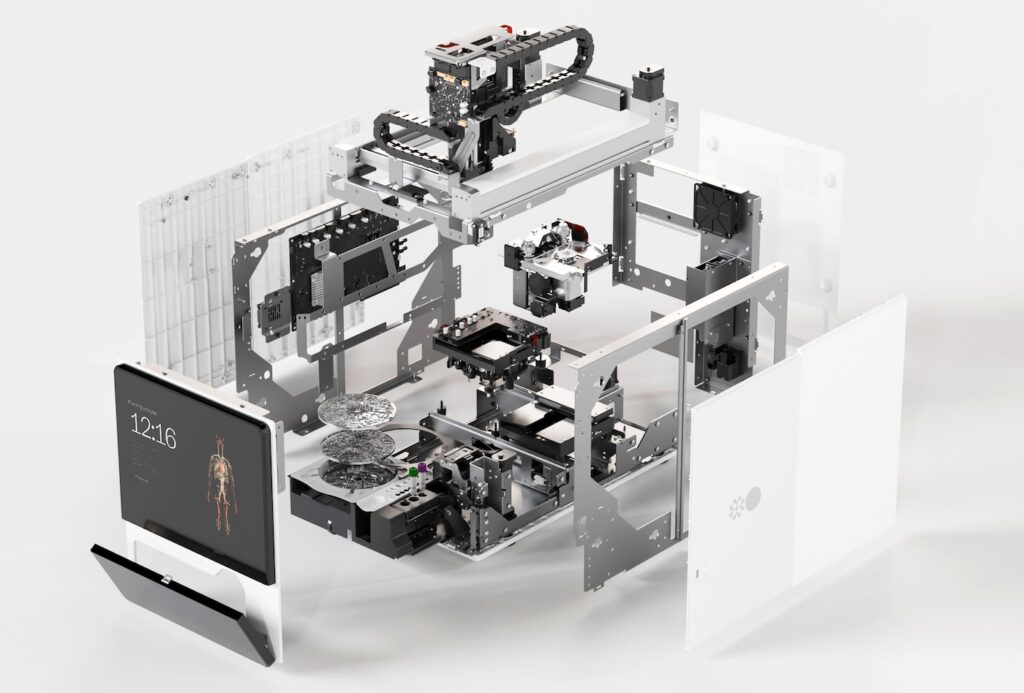
Truvian has shared performance data, sought independent evaluation at UC San Diego, and enlisted laboratory medicine experts to assess its technology. Its laboratories feature floor-to-ceiling windows where visitors can observe and operate instruments, while transparent covers at conferences reveal their inner workings. “That’s the ultimate transparency,” Marrinucci said. “It may sound a little symbolic, but it reflects how we think about diagnostics: that it shouldn’t just be some black box between the claim and the evidence. You can really see everything.”
Marrinucci also points to FDA review as a critical test, requiring analytical performance data alongside robust quality systems and manufacturing controls. “There are patient lives at stake, and the test results have to be accurate and reliable,” she said. “It was up to us to provide evidence of that.”
Babson has emphasized published clinical validation before commercialization. “It’s very important to us that we keep the focus on real data, on transparent data, and on developing technologies that you can prove work,” Olson said.
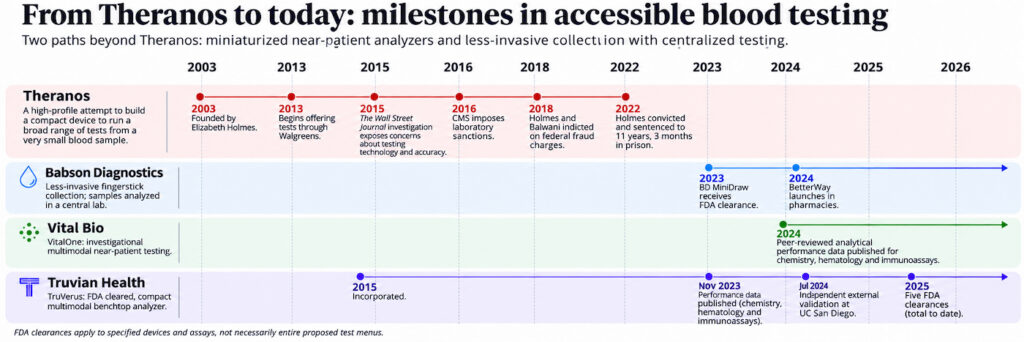
[AI-generated graphic created using OpenAI’s ChatGPT, with editorial direction from Inside Precision Medicine]
Where Theranos guarded its technology behind secrecy, its successors are opening their instruments and data to independent examination. Transparency alone cannot establish clinical reliability, but it enables the scrutiny needed to distinguish technological ambition from demonstrated capability.
Beyond the Theranos blueprint
Perhaps the greatest irony of Theranos’s legacy is that one of its central promises is being commercialized without miniaturizing the laboratory. Holmes’ 2013 Walgreens partnership collapsed amid revelations about unreliable testing, but Babson Diagnostics now offers fingertip blood collection at Central Texas retail locations, with centralized analysis and results typically within two days. The only company among Babson, Truvian, and VitalBio currently offering commercial testing, Babson is expanding through BD, although its single Austin laboratory limits geographic reach.

Yet technical validation doesn’t ensure commercial success. “There are a surprising number of companies that make it all the way to the mountaintop,” VitalBio’s Nadella said. “They get something cleared, but then they die anyway because they’re effectively selling $10 bills for $5 for far too long.” Manufacturing costs, consumables, and reimbursement remain hurdles.
Meanwhile, Truvian and VitalBio are betting on the clinical value of immediate results. Their divergent approaches reveal that improving blood collection, expanding test menus, and decentralizing analysis need not require the same technology.
Theranos promised to put the entire laboratory inside a box. Its successors are discovering that the more important question is what belongs inside it.