





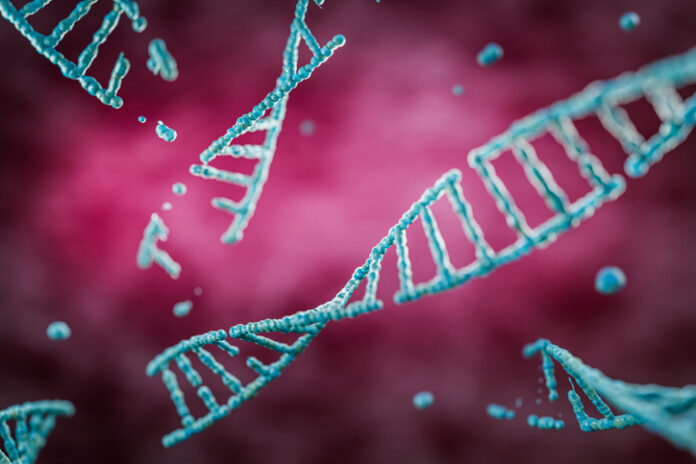
SEATTLE—Fragmentomics. That one word was one of the buzzier terms at the Association for Molecular Pathology (AMP) 2026 Annual Meeting, representing a broader theme of extracting more biological information from increasingly inexpensive sequencing technologies.
Traditional liquid biopsies largely focus on detecting mutations or alterations in DNA methylation patterns in cell-free DNA (cfDNA). Fragmentomics takes a different approach, examining how cfDNA breaks apart. Research dating back to 2015 demonstrated that DNA fragmentation is not random but reflects chromatin organization and epigenetic regulation. These patterns can reveal information about tissue of origin, cellular activity, and disease that mutations alone might miss.
The implications for oncology are considerable. Tumor-derived DNA often exhibits different fragmentation patterns than DNA released by healthy cells. By examining these patterns across the genome, researchers may be able to detect cancer without identifying specific mutations, determine a tumor’s tissue of origin, and monitor treatment response or molecular residual disease.
An increasingly promising strategy is multimodal liquid biopsy, which combines fragmentomics with mutations, copy-number alterations, methylation patterns, and other molecular features. Rather than relying on a single biomarker, these approaches extract complementary information from the same sample, potentially improving diagnostic sensitivity without necessarily requiring more sequencing.

More information from less sequencing
At AMP, Julia Burnier, PhD, of McGill University, presented research involving esophageal adenocarcinoma, an aggressive cancer that has historically been difficult to monitor through liquid biopsy. These tumors can shed relatively little circulating tumor DNA (ctDNA), particularly in localized disease, making mutation-based detection challenging.
Burnier’s team studied approximately 50 patients, combining mutation detection, copy-number alterations, and fragmentomic features into a machine-learning classifier. Together, these signals achieved approximately 85% ctDNA detection, outperforming individual approaches. But the more intriguing finding came when the researchers asked whether all that information was necessary. By identifying the most informative features, they found that copy-number and fragmentomic signals derived solely from shallow whole-genome sequencing (WGS) could retain useful discriminatory power, potentially eliminating the need for more expensive targeted sequencing. The estimated sequencing cost was approximately $100.
Stanford University’s Hanlee P. Ji, MD, offered a complementary perspective, focusing on maximizing the information extracted from individual DNA molecules. Using long-read nanopore sequencing, his team simultaneously analyzed DNA fragmentation, methylation, and hydroxymethylation in cerebrospinal fluid (CSF) from patients with lung cancer brain metastases. The researchers identified fragmentation patterns that distinguished cancer patients from healthy controls, including nucleosome-associated signatures that behaved differently in blood and CSF.
Although preliminary, the findings illustrate how a single sequencing approach can capture multiple layers of molecular information without requiring separate assays for each biomarker. Where Burnier demonstrated the potential of inexpensive sequencing to capture diagnostically useful signals, Ji highlighted how richer molecular measurements could reveal additional disease biology. Together, their presentations illustrated two complementary strategies: reducing the cost of obtaining clinically useful information and increasing the amount of information extracted from each assay.
Can sequencing deliver a $100 liquid biopsy?
Today’s commercial liquid biopsies can cost thousands of dollars. Guardant Health, for example, lists a cash-pay price of $8,455 for its Guardant360 Liquid CDx comprehensive genomic profiling test, while Medicare’s initial payment for the Shield colorectal cancer screening assay was $1,495. These are different pricing measures, rather than laboratory production costs, but they illustrate the gap between commercial testing and Burnier’s approximately $100 sequencing estimate.
Ultima Genomics recently announced that its UG200 platform can sequence a human genome at approximately 30-fold coverage for $60 in sequencing consumables. But the company isn’t alone in approaching the economics needed for inexpensive liquid biopsy. A 2026 modeling study comparing sequencing technologies for cfDNA-based cancer detection estimated consumables costs of approximately $4 per genome-equivalent coverage on Ultima’s UG100, compared with $15 on Illumina’s NovaSeq X and $73 on Oxford Nanopore’s PromethION. PacBio’s short-read Onso platform was estimated at approximately $29.
These figures, converted to U.S. dollars from prices collected in November 2025, reflect theoretical sequencing capacity and consumables costs rather than experimentally validated liquid biopsy workflows. They nevertheless suggest that shallow whole-genome sequencing could be performed for substantially less than $100 on multiple platforms, particularly at high sample volumes. Whether those savings translate into an equally inexpensive clinical assay depends on sequencing depth, library preparation, sample throughput, and the molecular information required for diagnosis.
There are technical differences beyond cost. Illumina’s established paired-end sequencing workflows are well suited to measuring cfDNA fragment lengths and genomic coverage patterns. Ultima’s UG200 now also supports paired-end sequencing, potentially expanding its compatibility with fragmentomic analyses. Whether either platform can preserve the particular molecular features required by Burnier’s classifier at a given sequencing depth would need to be established experimentally.

Long-read sequencing presents a different proposition. Oxford Nanopore, the technology used in Ji’s research, can analyze DNA sequence and certain epigenetic modifications directly, potentially eliminating separate chemical conversion or enrichment steps. PacBio’s HiFi technology also enables highly accurate sequencing and the detection of DNA modifications. However, their economics are less straightforward. The same modeling study estimated approximately $72.69 per genome-equivalent coverage for Oxford Nanopore’s PromethION, substantially higher than the short-read alternatives. PacBio’s Onso was estimated at $28.64, but Onso is a short-read system, not one of the company’s long-read HiFi platforms.
These differences matter because cfDNA is naturally fragmented, with many molecules measuring roughly 150–200 base pairs. For liquid biopsy, the potential advantage of long-read platforms may therefore lie less in sequencing exceptionally long molecules than in extracting additional information from each fragment. Could those additional measurements compensate for higher sequencing costs? Potentially, if they improve diagnostic performance or replace other laboratory assays. But neither Oxford Nanopore nor PacBio has established that its long-read technology can deliver a complete, clinically validated $100 cancer liquid biopsy.
For short-read platforms, meanwhile, low sequencing costs don’t automatically translate into equally inexpensive tests. Sample collection, cfDNA extraction, library preparation, quality control, computational analysis, clinical interpretation, personnel, and laboratory overhead all contribute to the final price. A study evaluating Ultima’s UG100 for metagenomic pathogen detection in CSF provides an instructive example. Researchers estimated approximately $60 in sequencing costs and $40 in additional reagent expenses per sample. Although unrelated to cancer detection, the work illustrates how inexpensive sequencing can bring laboratory reagent costs toward $100 without necessarily covering the full expense of a clinical test.
For Burnier’s assay, several questions remain unresolved. She did not specify which sequencing platform her team used, the precise sequencing depth, or whether the approximately $100 estimate included library preparation. Nor would a low-cost shallow-WGS approach necessarily work for every liquid biopsy application. Broad copy-number alterations and fragmentomic signatures may be detectable at relatively low coverage, whereas identifying extremely rare tumor-specific mutations, particularly in molecular residual disease, generally demands much greater analytical sensitivity.
The emerging picture is therefore more nuanced than any manufacturer’s headline sequencing price suggests. Several platforms may be approaching the economics necessary for inexpensive liquid biopsy, but their suitability depends on the molecular signals being measured and the clinical questions being asked.
Right information, right price
The larger question is whether a $100 liquid biopsy needs to do everything today’s more expensive tests can do. An inexpensive assay designed to detect broad cancer-associated signals might be useful for certain applications, while highly sensitive mutation-specific testing remains necessary for others. And sometimes, sequencing isn’t necessary at all. Burnier illustrated that point with research involving HPV-associated cancers. In oropharyngeal cancer, her team developed an inexpensive digital PCR assay to detect HPV DNA in blood and saliva, enabling treatment-response monitoring and showing promise for identifying patients at increased risk of recurrence.
The researchers subsequently expanded their work to cervical cancer, where access to screening remains a significant challenge in remote and underserved communities. In unpublished findings presented at AMP, Burnier described how plasma samples distinguished patients with cancer from those without, while urine and self-collected vaginal swabs helped differentiate high-grade from low-grade precancerous lesions. Unlike the esophageal cancer study, these assays relied on targeted HPV DNA detection rather than multimodal fragmentomics. For patients facing geographic, financial, or other barriers to conventional screening, inexpensive tests using self-collected samples could expand access to molecular diagnostics, provided their clinical performance is validated.
These findings underscore that liquid biopsies don’t necessarily require blood, deep sequencing, or sophisticated computational pipelines to provide clinically relevant information. Likewise, greater analytical sophistication doesn’t automatically translate into greater clinical utility. Detecting additional molecular signals offers little advantage if those measurements don’t improve treatment decisions and, ultimately, patient outcomes. And affordability matters only if the test performs reliably in its intended clinical setting. The challenge is finding the right balance between analytical sensitivity, biological information, clinical utility, and cost.
Perhaps the future of liquid biopsy isn’t about extracting every possible piece of information from a sample but determining how much information we actually need and how cheaply we can obtain it. A $100 liquid biopsy may be technically within reach for certain applications. But the more consequential question is what $100 can reliably tell us about a patient’s disease and whether that’s enough to improve their care.


