




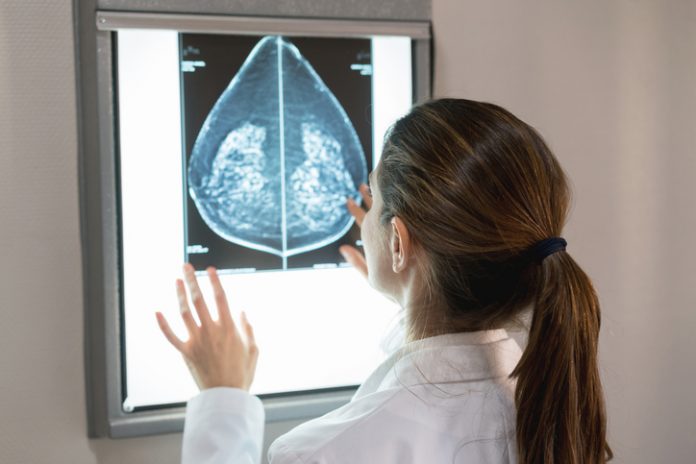
Using artificial intelligence (AI) assistance to aid breast cancer detection rates reduces radiologist workload significantly, while maintaining the same level of cancer detection and call backs for further follow-up.
Normally, mammograms are read by at least two radiologists to allow for human error. The new assistive technology allows a radiologist to review the mammogram findings with the help of the AI.
The researchers, led by Radboud University Medical Center in the Netherlands, used an AI model that predicts how likely it is that a person undergoing a mammogram screen has cancer, while including a measure of uncertainty. When the AI is confident, it reads the mammogram independently; when uncertain, it refers the case to the radiologist.
“Although the overall performance of state-of-the-art AI models is very high, AI sometimes makes mistakes,” said first author Sarah Verboom, a doctoral candidate at Radboud University, in a press statement.
“Identifying exams in which AI interpretation is unreliable is crucial to allow for and optimize use of AI models in breast cancer screening programs.”
As reported in the journal Radiology, the current study included 41,469 breast examinations from 15,522 women aged 54 to 66 years. Overall, 61.9% of the exams were referred to the radiologists by the AI, reducing the number of reads needed by around 38%.
In the hybrid group, where some reads were done by AI and some by a radiologist, the rate of call back for follow up appointments was 23.6% and the subsequent rate of cancer detection was 6.6%. The rates in the standard care group, where scans were checked by two radiologists, resulted in a similar rate of callback of 23.9% and cancer detection rate of 6.7%.
“Use of AI with uncertainty quantification can be a possible solution for workforce shortages and could help build trust in the implementation of AI,” Verboom said.
“I think in the future, we could get to a point where a portion of women are sent home without ever having a radiologist look at their mammogram because AI will determine that their exam is normal…We’re not there yet, but I think we could get there with this uncertainty metric and quality control.”
The team wants to do more research to better assess how the reduction in reading time of the scans through use of AI actually impacts radiologist workload in real time.
“The real innovation in this study lies not just in workload reduction, but in the proposed framework. Its approach acknowledges the potential and the limits of AI. The AI tool is not used indiscriminately. Instead, it contributes when helpful and steps back when appropriate,” notes Pascal Baltzer, MD, professor at the University of Vienna, in an accompanying editorial in the same journal.
“In this study, AI identified that about four in every 10 cases did not require a second look—cases where the algorithmic output was consistently accurate. That’s practical, data-informed triage that connects with clinical reality.”