





The COVID-19 pandemic created an unprecedented global event where billions of people developed immune memory against the same virus, either through infection or vaccination. Now, scientists are exploring whether this pre-existing immunity can be redirected towards tumors to make cancer vaccines more effective.
Preclinical results published this week in Nature Communications show promise for a cancer vaccine that pairs tumor antigens with viral antigens the immune system has already been trained to recognize. The vaccine is being developed by the biotechnology company Celloram in collaboration with researchers from University Hospitals and Case Western Reserve University.
“Rather than inventing a completely new immune response, we are enhancing the ability of the immune system to recognize cancer by leveraging antiviral memories it already has,” said Tej Pareek, PhD, chief executive officer of Celloram. “Instead of asking how to build increasingly complex cancer vaccines from scratch, we asked a different question: Can we harness the immune memories that billions of people already possess and redirect them against cancer?”
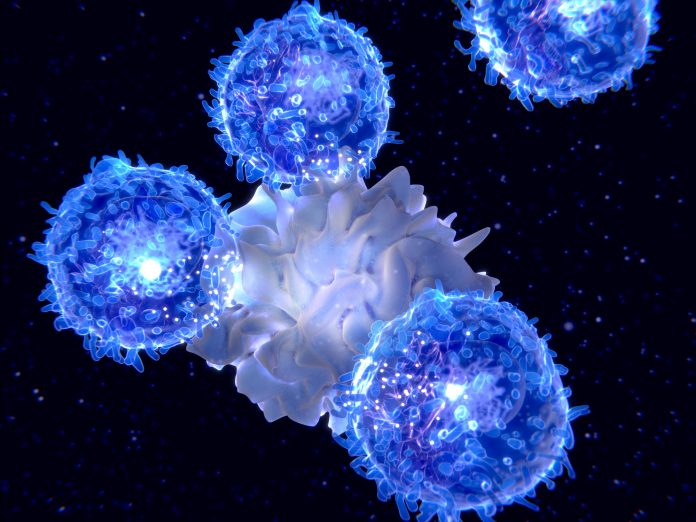
Celloram’s PROTEXI vaccine is designed to target dendritic cells, which play a major role in training the immune system to recognize antigens from pathogens and tumor cells. In the past, dendritic cell vaccines have seen limited success in oncology; in clinical trials, only about 15% of cancer patients have been reported to respond to these vaccines.
The new vaccine combines tumor antigens with antigens derived from the spike protein of the SARS-CoV-2 virus—the same protein targeted by many COVID-19 vaccines to generate an immune response against the virus. The viral antigen acts as a catalyst, amplifying the immune system’s ability to recognize the paired tumor antigen and target cancer cells.
In mouse models of melanoma and breast cancer, the vaccine enhanced T-cell infiltration into previously immune-cold tumors, slowed down tumor growth, and extended survival. When combined with other immunotherapies, the vaccine enhanced the immune response even in treatment-resistant tumors.
“The preclinical data exceeded our expectations,” said Seunghwan Lim, PhD, vice president of research and operations at Celloram and senior author of the study. “PROTEXI not only enhanced tumor-specific immune responses but also reshaped the tumor microenvironment, expanded immune memory, and improved responses in models resistant to current therapies. We believe this strategy has the potential to redefine how future cancer vaccines are designed.”
Building on these findings, Celloram is preparing for a first clinical trial in patients with sarcoma. If successful, the vaccine could target a broad range of cancers, including immune-cold tumors that have so far proven resistant to immunotherapy.
“PROTEXI offers a compelling solution by redirecting robust antiviral immune memory toward tumor eradication,” said John J. Letterio, MD, professor of pediatrics at Case Western Reserve University and director of the Angie Fowler Adolescent and Young Adult Cancer Institute at University Hospitals. “These findings have provided the scientific rationale to advance this platform into first-in-human studies for patients with sarcoma, a disease where innovative immunotherapeutic approaches are urgently needed. For us, it is only the beginning of what we hope will become a new chapter in precision cancer immunotherapy.”