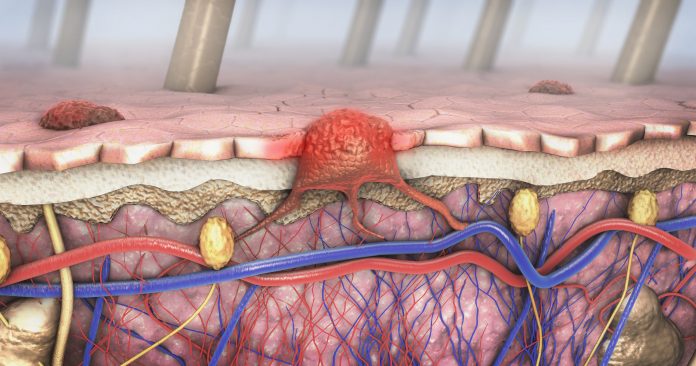
A genetically engineered herpes simplex virus (HSV-1) named RP1, when combined with immunotherapy, reduces or eliminates melanoma tumors in one-third of clinical trial patients, according to a new study. An analysis of the Phase I–II of the IGNYTE clinical trial, was published in the Journal of Clinical Oncology and presented recently at the 2025 American Society of Clinical Oncology (ASCO) annual meeting. The data showed that one-third of patients with advanced melanoma treated with RP1, in combination with PD-1 targeting immunotherapy nivolumab, experienced tumor reductions of at least 30% and nearly 17% had complete disappearance of tumors. The median duration of response exceeded 21 months, with 85% of those responses ongoing at one year.
“These findings are very encouraging because melanoma is the fifth most common cancer for adults, and about half of all advanced melanoma cases cannot be managed with currently available immunotherapy treatments,” said Gino Kim In, MD, principal investigator at Keck Medicine of USC and steering committee member of the IGNYTE trial.
The IGNYTE trial enrolled 140 patients across global clinical sites, including Keck Medicine. All participants had advanced melanoma that had progressed despite prior checkpoint inhibitor immunotherapy. Patients were eligible if they had at least two injectable tumors, including superficial lesions or visceral metastases. RP1 was administered intratumorally every two weeks for up to eight cycles, alongside nivolumab. Patients who responded continued nivolumab alone every four weeks for up to two years.
The investigators observed tumor reduction in both injected and uninjected lesions, including internal tumors including liver and lung metastases. This suggests systemic activity of the RP1-nivolumab combination.
“This result suggests that RPI is effective in targeting cancer throughout the entire body and not just the injected tumor, which expands the potential effectiveness of the drug because some tumors may be more difficult or impossible to reach,” said In, who is also a member of USC Norris Comprehensive Cancer Center, part of Keck Medicine of USC.
RP1 is engineered to express GM-CSF and a fusogenic protein, enabling it to directly kill cancer cells and stimulate immune activation. Nivolumab, a PD-1 checkpoint inhibitor, complements this by enhancing T-cell mediated tumor clearance.
Early cohorts of the IGNYTE study showed objective response rates (ORR) of 37.4%, with 18.7% complete responses. Responses occurred across a range of tumor burdens and were independent of PD-L1 expression. Subsequent primary analysis presented at ESMO 2024 confirmed a 33.6% ORR and a 15% complete response rate, with durable responses over a median of 21.6 months. Preliminary survival data showed a three-year overall survival rate of 54.8%, though final survival analysis is ongoing.
The combination therapy showed a favorable safety profile, with most adverse events grade 1 or 2 and included fatigue, chills, and mild fever-like symptoms. Grade 3 or higher events were limited, and there were no treatment-related deaths reported.
The FDA granted priority review to the RP-nivolumab combination for patients whose melanoma has failed prior PD-1 therapy, and breakthrough designation was granted for the therapy in Novermber 2024. A global Phase III confirmatory trial, IGNYTE-3, is now enrolling more than 400 patients. It will compare RP1 plus nivolumab to investigator’s choice of therapy in patients with melanoma refractory to PD-1 ± CTLA-4 treatment. Keck Medicine, under In, remains a participating site.
Researchers aim to validate efficacy, assess long-term safety, and further explore biomarkers of response. Early analyses suggest RP1 enhances CD8+ T-cell infiltration and tumor inflammation signatures. Clinical implications include a potential new treatment for patients who have progressed after standard immunotherapy, with evidence of systemic activity following localized injection.