





Genetic medicines promise to treat disease at its source, with advances in gene therapy and gene editing bringing us closer to truly personalized treatments. The landmark Baby KJ case in 2025, involving a bespoke base-editing therapy developed for a single infant, demonstrated what’s becoming possible. But manipulating genes is only half the challenge. The other half is delivering genetic instructions safely and precisely to the right cells.
For decades, gene therapy has relied on viral vectors. More recently, nonviral technologies, particularly lipid nanoparticles (LNPs), have gained momentum, offering advantages in manufacturing, repeat dosing, and cargo flexibility. Yet both approaches have limitations, and whether one is inherently safer is still uncertain.
That question has gained urgency following reports of spinal cord tumors in nine patients previously treated with Zolgensma, an adeno-associated virus (AAV)-based gene therapy for spinal muscular atrophy. Although causation has not been established, the findings raise concerns about the long-term safety of genetic delivery.
In this episode of Behind the Breakthroughs, Jagesh Shah, PhD, chief scientific officer of Mirai Bio, a Flagship Pioneering company, explores how combining lipid chemistry, experimental screening, and machine learning helps to develop LNPs that target specific tissues and cell types while minimizing unwanted delivery.
We discuss Mirai’s work targeting T cells and adipocytes, the challenges of translating animal studies into humans, and the safety trade-offs between viral and nonviral delivery. We also examine the Zolgensma findings and whether nonviral technologies might eventually rival or replace viral vectors. Ultimately, the question is not just what genetic medicines can do, but whether we can deliver them safely enough to realize their potential.
This interview has been edited for length and clarity.

IPM: Lipid nanoparticles naturally tend to accumulate in the liver, yet their components can be varied to alter tissue targeting. How does Mirai design and optimize LNPs to reach different tissues and cell types?
Shah: We started from the premise that the chemistry of the ionizable lipid is critical to determining tissue tropism and enabling escape from the endosome so that the nucleic acid cargo can reach its destination. At the same time, we have to consider toxicity and tolerability. Ideally, the delivery vehicle breaks down quickly and essentially disappears after delivering its cargo. The best delivery vehicles are the ones you don’t notice.
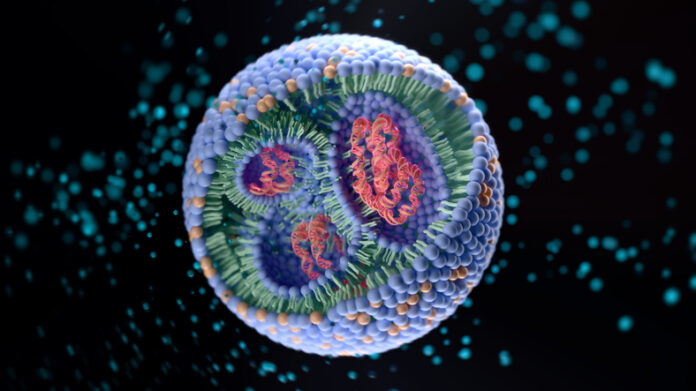
An ionizable lipid is one component of a mixture that typically contains four or five components. We combine these with nucleic acids through a process called nanoprecipitation. The components assemble around the nucleic acids to form particles on the nanometer scale, which we then deliver.
The ionizable lipid has many properties, and the only reliable way to establish where a particular formulation will go is to test it in vivo. There has already been substantial innovation in this chemistry, including the ionizable lipids used in Onpattro and the BioNTech and Moderna vaccines. The question is how to build on that foundation and explore what other formulations can do. For now, this remains a highly empirical process: We generate many different chemistries and LNP formulations, test them in vivo, and observe where they go.
One of our first goals at Mirai was to map the relationship between ionizable-lipid chemistry, the proportions of the formulation’s components, and biodistribution. We screened a large number of lipids in vivo to understand which chemistries were potent and where they tended to accumulate. That work produced a database of roughly 400 ionizable lipids—probably closer to 500 now—evaluated across six tissues in mice.
That’s where machine learning comes in. We feed the model the lipid chemistry, the proportions of the formulation components, and the experimental results. We’re not yet at what I call the “ChatLNP” stage, where you type in a request and a perfect formulation appears. Instead, we use iterative active learning. We might set an objective of maximizing delivery to the spleen while minimizing delivery to the liver. The model proposes formulations, we test them in vivo, and we feed the results back into the model.
Usually, within three or four rounds—roughly six months of laboratory work—we can arrive at a formulation with a tightly defined distribution and high selectivity for the objective we’re pursuing. What’s fascinating is that we still don’t fully understand the relationship between ionizable-lipid chemistry and biodistribution. The model is identifying useful patterns, even though we cannot yet articulate all the underlying rules. I hope we’ll eventually be able to open that black box. For now, we’re learning as we go.
IPM: What is the significance of Mirai’s latest data on targeting adipocytes and T cells?
Shah: The adipocyte work came from a partner interested in injecting an LNP directly into adipose tissue to deliver a cargo for an obesity-related or metabolic application. The key requirement was that the formulation remain localized. The partner wanted expression in adipocytes without substantial leakage to other organs, particularly the liver and spleen. We already had a large body of formulation data, so we used it to select promising starting points. But our initial formulations, like many commercially available LNPs, leaked from the injection site and reached other tissues.
We then used machine learning to identify formulations that would stay in adipose tissue and deliver to adipocytes while minimizing delivery to the liver and spleen. After four rounds, we identified new chemistries and formulations that produced high, localized expression in adipocytes following direct injection into the fat pad, with nearly undetectable delivery to the liver and spleen. We’re excited to explore the potential applications with our partner. It was a clear demonstration of our ability to sculpt biodistribution around a particular use case.
The T cell work illustrates a different capability. Ex vivo chimeric antigen receptor (CAR) T-cell therapies have produced remarkable results, but manufacturing them is complex. If we can reprogram T cells directly inside the body, we may be able to avoid much of that complexity. At Mirai, we developed a base LNP that reduced liver delivery and enriched delivery to the spleen. We then identified targeting agents that enabled effective delivery to T cells.
A partner provided an mRNA encoding a CAR, and we were able to scale the formulation very quickly. My experience with viral vectors made the difference especially striking. With a viral vector, preparing enough material for a nonhuman primate (NHP) study might take six months. In this case, we had material ready and generated data in roughly two months. We demonstrated the intended biological effect: the engineered T cells depleted B cells, as many ex vivo CAR T products are designed to do. Because the receptor was encoded by mRNA, its expression was transient, and the engineered activity diminished as the mRNA disappeared.
The speed of that work was particularly exciting. Machine learning helped us develop the formulation, and the LNP platform allowed us to manufacture and scale it quickly. Taken together, the adipocyte and T-cell studies highlight two aspects of our platform: optimizing biodistribution for a specific tissue and adding targeting capabilities to reach a particular cell type. The broader field of in vivo immune-cell reprogramming is advancing rapidly.
IPM: How does Mirai Bio approach derisking?
Shah: NHP are our best available model for many of these questions, although they’re certainly not a perfect model. We use human cells early in development to establish whether a formulation can enter the relevant cell type. But a cell culture cannot reproduce everything that happens in an intact organism, including biodistribution, interactions in the bloodstream, and the biological barriers that may interfere with delivery.
That’s why moving quickly to NHP studies is important. I think of those studies as a major inflection point in development. They can tell us two things. First, does the mechanism produce the expected effect in an organism more closely related to humans? Second, what do we learn about tolerability and toxicity?
There are different approaches to these studies. Some researchers pretreat animals with steroids or antihistamines. Our preference, in many experiments, is to study the vehicle without pretreatment so we can learn as much as possible about its intrinsic tolerability. I sometimes describe it as testing the formulation “neat,” like scotch without ice.
Ideally, the vehicle delivers its cargo and then becomes biologically silent. That gives our partners the best opportunity to achieve a useful therapeutic window, because the cargo itself will have biological effects. We want to understand the vehicle’s contribution as clearly as possible.
IPM: Recent reports of tumors in spinal muscular atrophy (SMA) patients treated with Zolgensma—an AAV-based gene therapy—have raised concerns about genomic integration. What do these findings mean for viral versus nonviral delivery, and which safety considerations matter most?
Shah: The AAV findings raise important questions about the long-term safety of DNA delivery, particularly the potential consequences of genomic integration. That risk is not necessarily specific to viral vectors.
One idea in the field is that more targeted delivery could allow lower doses and potentially reduce some risks. But we’ll need considerably more research to understand the underlying mechanisms and how different approaches to DNA delivery compare.
IPM: Do you foresee nonviral delivery eventually replacing viral vectors, or will both remain important parts of the genetic medicine toolkit?
Shah: I think there’s room for both viral and nonviral approaches. Viral vectors currently have advantages in reaching certain tissues, while nonviral systems offer advantages in scalability, repeat dosing, and cargo flexibility.
I’m optimistic that nonviral technologies will catch up in some of the tissues that are currently difficult to reach. But ultimately, the question is which approach offers the best outcome for the patient. We should keep all the available technologies on the table so that we can develop the safest and most effective medicines.
IPM: How much person-to-person variability is there in the response to LNPs, and how well do we understand it? Can patients respond differently to the delivery vehicle itself, independently of the therapeutic cargo?
Shah: Patient-to-patient variability is a concern in any clinical development program. One component worth considering is polyethylene glycol, or PEG, which is used in many LNP formulations. PEG is also present in a wide range of consumer products, including cosmetics. In an LNP, it helps create a protective barrier and can prevent the particle from being disrupted too quickly.
But PEG can also be recognized by the immune system. Some people may have anti-PEG antibodies or different levels of prior exposure, and those differences could affect how they respond to a formulation. We need to understand whether such factors create clinically meaningful variability.
I think we’ll learn much more as LNPs are used at scale beyond vaccines. We’re beginning to see rapid progress in gene-editing therapies and mRNA-based oncology approaches. First, we’ll learn whether these therapies work. Then we’ll start to identify subsets of patients whose responses differ in ways we don’t yet understand. That will require careful biological investigation.
IPM: Looking five to ten years ahead, what milestones would define success for Mirai Bio?
Shah: For Mirai, one near-term priority is enabling delivery to immune cells, blood cells, and the liver. Even though the liver is often described as a tissue we want to avoid, some partners specifically want to target it. We need to offer formulations that can reach those tissues effectively, with additional cell-type targeting where appropriate.
Beyond that first tier, there are other tissues we’d like to unlock. The lung is a particularly important example. You can approach it through inhaled delivery or through the bloodstream. It is relevant to many diseases, including genetic conditions such as cystic fibrosis and primary ciliary dyskinesia. We often have a good idea of the genetic intervention we’d like to make, but getting the nucleic acid to the right cells remains difficult. Some of the genes involved are large, and LNPs offer useful flexibility in the cargo they can carry.
The pancreas and kidney are other important targets. Then there are the tissues I consider especially difficult to reach, including skeletal muscle, the heart, and the brain. How can we reach those tissues through an injection into the bloodstream? In many cases, the challenge is crossing the endothelial barriers that protect them.
This connects to the antibody conjugates you mentioned. Researchers are developing molecular shuttles that engage receptors and help cargo cross the endothelium, including in the brain and muscle. We’re interested in whether similar strategies could help deliver not just an oligonucleotide or an antibody but a larger genetic payload encoded in mRNA or DNA. It’s a difficult problem, but one we’re eager to work on.
Success wouldn’t mean solving only that one challenge. We’d also like to unlock immune and blood cells and make progress in tissues such as the lung, pancreas, and kidney. Internally, we try to anticipate what partners will need and advance the technology to what I call “base camp.” If we can show meaningful progress toward a cell type, a partner can see the opportunity and work with us to scale the rest of the mountain.