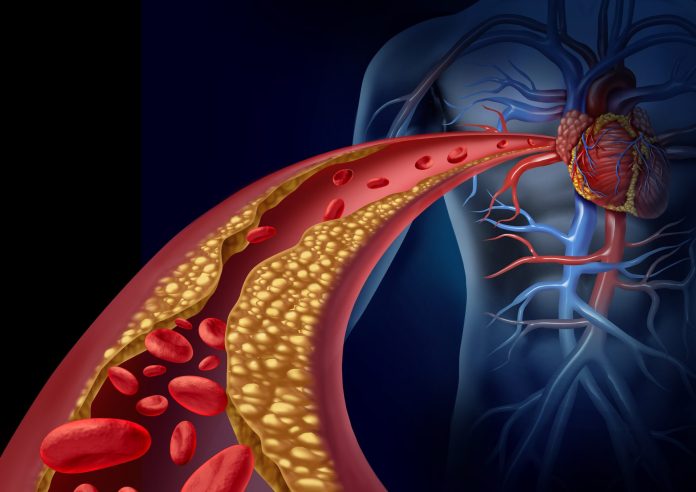
University College London (UCL) researchers say that they have developed a new risk scoring tool that could help prevent unnecessary surgeries and stents in patients now considered at risk of stroke and heart attack. The tool, called the Carotid Artery Risk (CAR) score, stratifies patients with asymptomatic carotid atherosclerosis based on age, sex, and common cardiovascular risk factors to effectively predict future stroke and heart attack risk.
“Currently, many patients undergo surgery or stenting to prevent strokes resulting from atherosclerosis,” noted a press release from UCL. However, these procedures also carry risks of causing strokes and other serious complications at the time of the intervention.”
These findings, published in The Lancet Regional Health, suggest the CAR score may be a valuable clinical tool that could shift current practice from imaging-based risk evaluation toward a more accessible, clinical scoring system for predicting major cardiovascular events. Using the CAR score, clinicians could shift care for some patients to safer, less invasive treatments, including a combination of medications and lifestyle changes, instead of surgery.
Previous studies have pointed to using carotid plaque imaging to predict the risk of cardiovascular events. However, evidence on how to stratify patients with carotid atherosclerosis into high- and low-risk groups has been limited. Prior research showed that both plaque volume and features like intraplaque hemorrhage and lipid-rich necrotic core are associated with increased risk of cardiovascular disease, but these imaging methods require specialized equipment and are not always widely available. In the absence of symptoms or imaging abnormalities, treatment decisions often rely on general cardiovascular risk scores.
The CAR score was developed to offer a practical and reproducible alternative. It assigns points based on readily available clinical characteristics: age, sex, smoking status, history of hypertension, hyperlipidemia, and diabetes. Each factor contributes to a cumulative score that correlates with increasing risk of future cardiovascular events.
To evaluate the performance of the CAR score, researchers analyzed data from 3,872 individuals with asymptomatic carotid atherosclerosis from the Canadian Cohort of patients with moderate to severe Asymptomatic Carotid Atherosclerosis Study (CANVAS). Participants were prospectively followed for a median of 4.7 years. The primary outcome was a composite of stroke, myocardial infarction, or cardiovascular death. The study also assessed the CAR score’s ability to stratify patients by risk levels over three-year and five-year periods.
The study found a clear gradient of increasing risk with higher CAR scores. For example, at three years, stroke, myocardial infarction, or cardiovascular death occurred in 1.9% of patients with a CAR score of 0–2; 3.8% with a score of 3–5; 7.6% with a score of 6–8; and 12.4% with a score of 9 or more. At five years, those numbers rose to 3.6%, 6.3%, 10.9%, and 17.7%, respectively.
“These findings support the utility of the CAR score in stratifying risk among patients with asymptomatic carotid atherosclerosis,” the researchers wrote.
Current practice for evaluating asymptomatic carotid atherosclerosis often involves carotid duplex ultrasound or other imaging to determine the degree of stenosis or identify high-risk plaque features. However, the study’s authors argue that a clinical risk score like CAR could offer a more accessible and scalable alternative, especially in settings where advanced imaging is not available.
“The CAR score is simple to calculate, reproducible, and based on widely available clinical information,” the researchers wrote. “It may therefore be useful to identify individuals with carotid atherosclerosis at high risk of future vascular events who may benefit from intensive treatment and close follow-up.”
One strength of the study, the investigators noted, is its large prospective cohort with adjudicated outcomes and a substantial follow-up period, which provides clear evidence for the predictive performance of the CAR score. The study also used data from multiple centers, enhancing the generalizability of its findings.
However, the study had several limitations. The cohort was restricted to Canadian patients, and findings may not be generalizable to populations with different demographic or healthcare characteristics. The study also did not compare the CAR score directly with imaging-based models or existing cardiovascular risk scores like the Framingham or ASCVD calculators.
Next steps for the research team include validating the CAR score in a wider variety of populations and exploring how the score can be integrated into clinical workflows. Additional work could also evaluate whether incorporating imaging features into the CAR score could further refine its predictive ability.