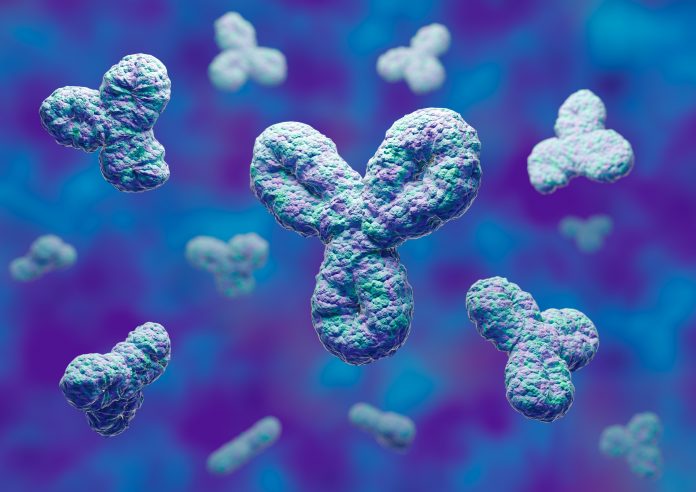
Researchers at the University of Texas MD Anderson Cancer Center have created a promising cancer treatment, a novel antibody-toxin conjugate (ATC), designed to stimulate the body’s own immune system to attack and eliminate tumors. This potential new class of drug, detailed in Nature Cancer, could overcome the resistance developed by the traditional design of antibody-drug conjugates (ADCs) to provide more durable treatment responses.
“Effective ADCs are designed to destroy tumor cells, but they often do so incompletely, leading to resistance and recurrence,” said senior author Wen Jiang, MD, PhD, associate professor of radiation oncology at MD Anderson Cancer Center. “With this new ATC approach, we aim to trigger the body’s natural immune response. This should not only limit side effects, but also allow the immune system to attack tumors throughout the body and potentially prevent their recurrence.”
ADCs have been a significant development in cancer treatment, with their ability to target delivery of chemotherapy to tumor cells. This new approach differs fundamentally by not relying on direct cell destruction. Instead, it targets CD47, a protein that solid tumors often express to evade the immune system’s defenses. The antibody component of the ATC binds to CD47, delivering a bacterial toxin, marking the cancer cells for detection and attack by the immune system.
Once immune cells engulf the cancer cells, the toxin is activated inside the cell, leading to the release of tumor material, such as DNA and protein fragments. These materials then teach the immune system to recognize and attack the tumor more effectively.
“This design was inspired by bacteria, which have an incredible ability to escape from cells’ internal traps, multiply, and spread, all while keeping the host cell alive and functional,” Jiang said. “We’re harnessing that same ability to shuttle intact tumor material to the right places within immune cells. Instead of being destroyed, the tumor material teaches the body to better recognize tumor cells.”
In preclinical models of breast cancer and melanoma, the ATC developed by Jiang and team showed several beneficial characteristics. One was that the immune system was able to recognize the unique signatures of cancer cells that distinguish them from normal cells, allowing for a more effective triggering of an antitumor immune response. This allowed the immune cells to eliminate tumors throughout the body.
Significantly, the investigators found that the T cells generated by the immune system taking this approach persisted for up to two months, suggesting a memory effect that could help prevent tumor recurrence.
The study’s first author Benjamin Schrank, MD, PhD, a resident physician at MD Anderson Cancer Center, noted the potential of this new approach: “We hope this new design opens up an entirely new avenue for research that expands the possibilities for ATCs. We want to train the immune system to recognize and respond to these tumors so it can continue fighting cancer even after the treatment is completed.”
Beyond its direct potential in cancer immunotherapy, the ATC may be even more effective when combined with existing cancer treatments. Many solid tumors respond to radiation therapy by increasing the expression of CD47, which shields them from immune detection. By combining radiation therapy with the ATC, researchers believe they can make tumors more susceptible to immune attack.
Researchers are also exploring how LLO conjugates could be combined with other immune checkpoint inhibitors to further increase the therapeutic potential.
Future efforts will focus on improving the targeting efficiency of these drugs and optimizing the conjugate formulations to reduce potential side effects, as well as developing ways to target a range of cancers.
“This immune-stimulating ATC concept extends beyond CD47, and we are already developing projects that target other tumor-specific receptors to create ADCs that enable the body to target a wide range of difficult-to-treat cancers,” said study co-leader Betty Kim, MD, PhD, a professor of neurosurgery at MD Anderson.