Researchers at Harvard Medical School, in collaboration with the University of Freiburg in Germany and McGill University in Canada, have identified a new therapeutic target for glioblastoma, the deadliest form of brain cancer. In a study published in Nature, the team found a subtype of astrocyte cells that suppresses immune activity against glioblastoma and showed that inactivating these astrocytes can enhance tumor immunity and extend survival in preclinical models.
Despite glioblastoma being the most common type of brain tumor, the development of treatments against this aggressive form of cancer has seen limited progress over the past decades. “Immune checkpoint blockade, which has seen success in the treatment of other malignancies, has not shown clinical benefit in glioblastoma,” wrote the authors of the study. “A challenging aspect for the design of efficacious therapies for glioblastoma is the strongly immunosuppressive nature of the [tumor microenvironment], which is a major barrier for the success of immunotherapeutic interventions.”
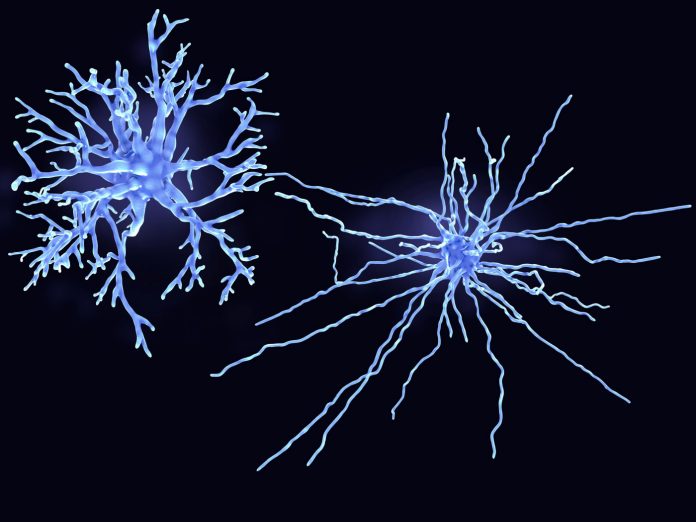
In recent years, astrocytes have increasingly attracted interest in glioblastoma research due to the important role they play in regulating the immune response in the central nervous system. Astrocytes are the most abundant type of glial cells, comprising approximately 50% of all brain cells, but little is still known about the role they play in the immune response against glioblastoma.
Using single-cell RNA sequencing, the researchers analyzed samples from glioblastoma patients and compared them to samples of healthy tissue. The results revealed that a subset of astrocytes could be found in larger numbers in glioblastoma patients, with the highest rates correlating to patients with accelerated cancer recurrence, within nine months after surgery. These findings were validated in a mouse model of glioblastoma, confirming that this astrocyte subtype caused T cell death in the tumor microenvironment, resulting in an impaired immune response against the tumor, a shorter recurrence time, and a lower survival rate.
The astrocytes expressed the tumor necrosis factor-related apoptosis-inducing ligand (TRAIL), which is responsible for limiting T cell activity in the context of inflammatory and autoimmune conditions such as multiple sclerosis. Glioblastoma cells were found to activate TRAIL expression in astrocytes via IL-11 signaling, suggesting that the tumors could be exploiting this mechanism to evade the immune system.
To validate the potential of this newfound therapeutic target, the researchers engineered an oncolytic virus to produce a TRAIL-blocking antibody in the tumor microenvironment. In human cells and in mice, this approach was able to increase survival and enhance tumor-specific T cell responses.
While more research will be needed to evaluate the safety and efficacy of this approach, the researchers believe that targeting astrocytes expressing TRAIL could boost the immune response against glioblastoma tumors and enhance the therapeutic effects of a variety of treatments beyond oncolytic immunotherapy, such as vaccination or chimeric antigen receptor (CAR) T cells.