




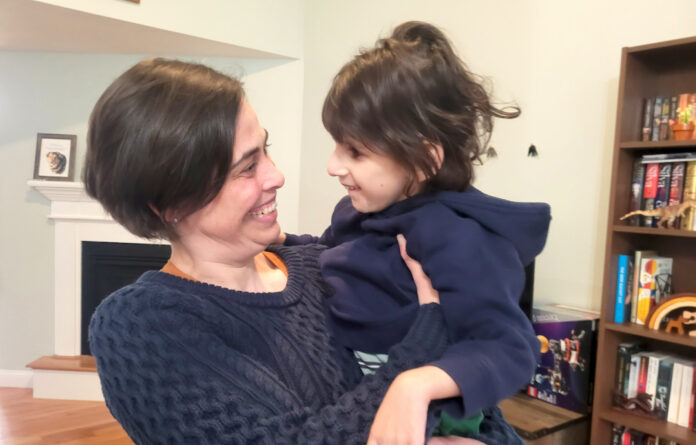
When Gurjot “Jo” Kaur was presented with her baby boy Riaan’s whole-exome sequencing (WES) results in March 2021, which revealed biallelic pathogenic variants in ERCC8 as the genetic cause of Cockayne Syndrome (CS), her diagnostic odyssey came to a close—and a whole new one began. Since there isn’t an available medicine for treating the underlying cause of CS, Jo became the captain of a therapeutic odyssey: designing, testing, manufacturing, funding, and regulating a therapy for a disease too rare to attract conventional drug development. That search ultimately led her to Miguel Sena-Esteves, PhD, and Ana Rita Batista, PhD, at the University of Massachusetts (UMass) Chan Medical School in Worcester, MA, where a larger question emerged:
Could an academic laboratory build genetic medicines for diseases the traditional drug-development model leaves behind?
A project waiting for a patient
The scientific roots of Riaan’s treatment predate his family’s involvement by several years. Early work on CS at UMass emerged through a collaboration involving Philip “P.J.” Brooks, PhD, at the National Institutes of Health, who studied the basic biology of the disease, and Terry Flotte, MD, then dean of UMass Chan Medical School. A graduate student worked on the project and made progress, Sena-Esteves recalled, but not enough to move toward clinical translation. Funding was limited. Eventually, the work stopped.
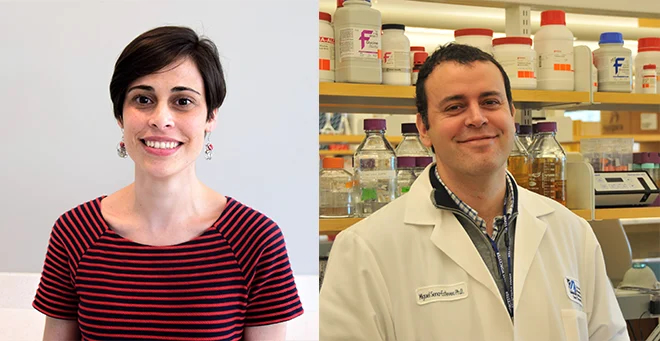
Then Jo came looking for a treatment for Riaan. She was ultimately directed toward Sena-Esteves and the Translational Institute for Molecular Therapeutics at UMass Chan. Batista, then working in Sena-Esteves’s laboratory, took the lead on the project. In one sense, there was nothing unusual about how it began. “Parents come to us, there’s an email, and we try our best,” Sena-Esteves told Inside Precision Medicine. The diseases they bring with them, however, can be extraordinarily unusual.
Rather than patient numbers, Sena-Esteves’s team prioritizes plausible pathways for neurological and neuromuscular diseases. That makes the model almost the inverse of conventional pharmaceutical development. A company may start with a therapeutic platform or commercially viable disease and find a product. The question for Sena-Esteves, Batista, and other translational researchers becomes whether an experimental medicine can be built at all.
How small is too small of a population?
Precision medicine promises to divide disease into increasingly precise biological subgroups. In oncology, that often means treating tumors by their mutations rather than their tissue of origin. In ultra-rare disease, that logic reaches its extreme: the subgroup can become a single child. Modern biology increasingly makes those therapies possible, but traditional drug development was never designed to build medicines for populations that small.
Sena-Esteves sees that mismatch repeatedly. “I wish it wasn’t that way—that we had plenty of money and could just work on it without putting such a high burden on the families and foundations,” he said. “But this is the reality we live in.”
Federal funding can help, but it rarely moves at the pace of disease. NIH grants require preliminary data, and each funding cycle can consume months. A rejected application may delay a program by a year—an inconvenience for science but potentially life-changing for a child with a progressive neurodegenerative disorder. “It depends a lot on the ability of foundations or parents to raise money,” Sena-Esteves said. “Programs can go faster or slower depending on the amount of money available.”
His team does not necessarily wait for families to arrive with enough money to finance the entire program. “We don’t tell people, ‘We won’t start until you have this kind of money,’ because we know that’s unrealistic as well.”
But the initial research is only the beginning—and the least expensive part. As a therapy moves toward the clinic, manufacturing, toxicology, regulatory requirements, and clinical development rapidly drive costs higher, leaving many families facing a second challenge: financing drug development. “A parent not only has a child with this terrible disease, but then they’re told, ‘Well, if you come up with $3-5 million dollars, sure, we’ll get it done,’” Sena-Esteves said. “That’s an untenable proposition in ultra-rare disease.”
The CX mouse: honoring James R. Mitchell
Before testing a therapy, researchers may face an even more fundamental problem: there may be no experimental model in which to test it. “For a lot of these diseases, there are no models out there,” Batista said. “We have to start from the beginning, generate the model, characterize it, and then start treating.” For CS, they caught a break.
The UMass team got lucky, but it was due to a casualty. The laboratory of James R. Mitchell, PhD, had previously developed the CX mouse, which combines CSA and XPA deficiencies to produce a more severe phenotype than single-gene models. After Mitchell died in a cycling accident in 2021, Jo tracked down cryopreserved CX embryos at ETH Zurich, and Sarah Mitchell, PhD, and Michael Robert MacArthur, PhD, offered to revive and donate them. “Jay would be very happy to see these mice being used for this translational work,” MacArthur wrote. With additional guidance and mouse lines from other researchers, UMass could quickly establish a colony and begin testing Riaan’s potential therapy.
The arrival of the CX mouse enabled the UMass team to begin with an established model rather than spending additional time creating one. When necessary, Batista’s group creates CRISPR-engineered models and is adding patient-derived cells like induced pluripotent stem cells. For Riaan’s program, the UMass researchers also used patient fibroblasts.
Yet each model only captures part of the disease. Mouse biology may not identically mimic human pathology, while human cells in a dish cannot reproduce an entire nervous system. The question is not simply which model is the most technologically sophisticated, but which evidence is sufficient to justify exposing a patient to an experimental therapy.
For now, Sena-Esteves still sees animal evidence as an important part of that calculation. “At the end of the day, there’s also the question of what the FDA will want to see,” he said. “So far, they want to see some proof of concept that says this actually has a good chance of working, which sounds pretty reasonable before you put something into a human.”
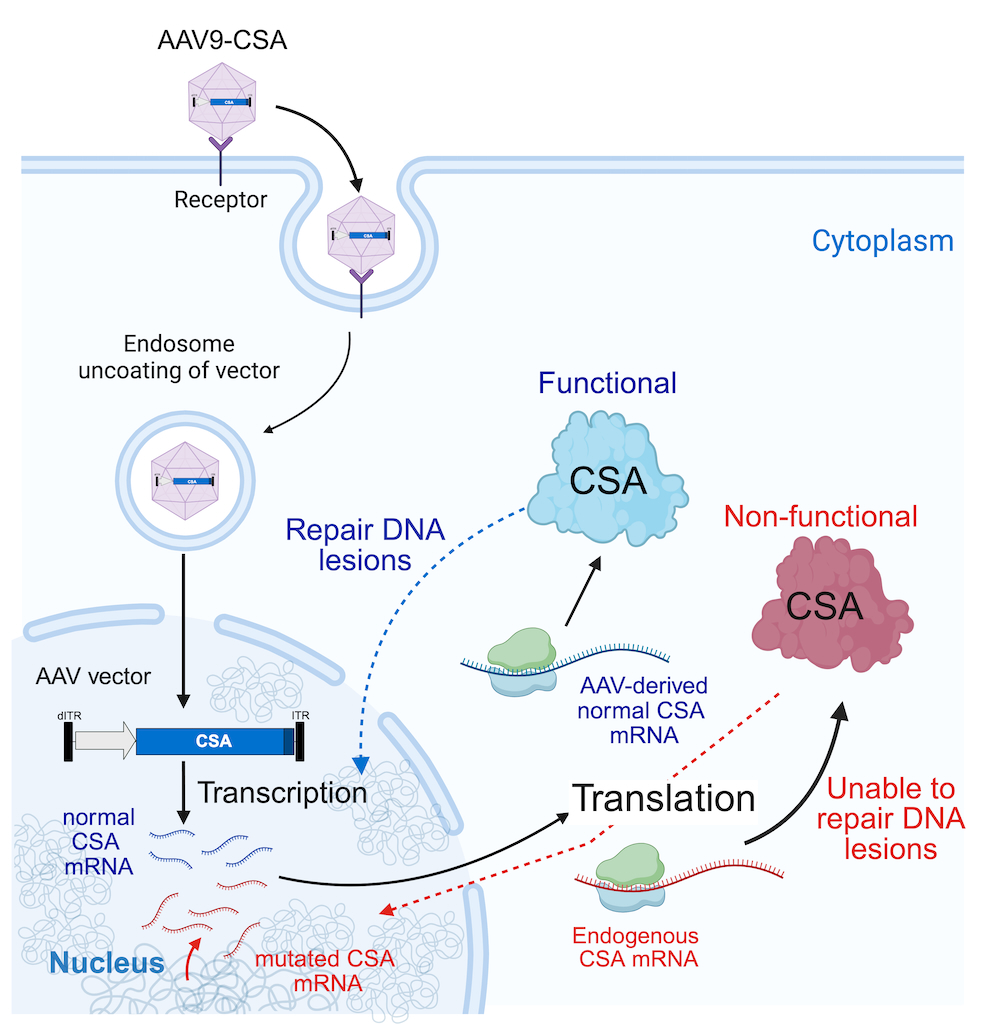
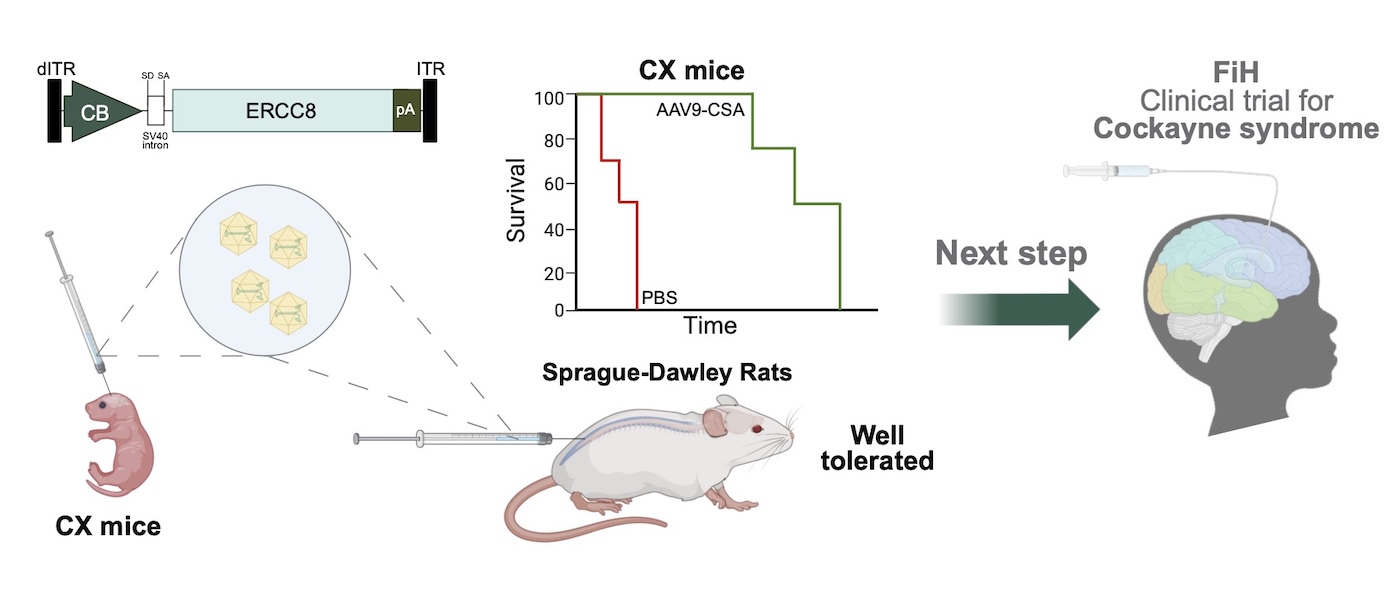
The CX model served as a test bed for Sena-Esteves and Batista’s CS ERCC8 gene therapy vector, AAV9-CSA, which encodes human CSA under the control of a ubiquitous promoter. When AAV9-CSA was injected into the intracerebroventricular space of neonatal CX mice, the gene therapy increased the lifespan of the subjects and spread the virus throughout their brains and hearts, all without causing any harm to the vectors.
But the results weren’t perfect. While there was clear therapeutic benefit, the UMass team also observed neuropathologic changes, hypomyelination, astrocytosis, and microgliosis in the brain and liver, as well as likely life-limiting transcriptomic abnormalities in the liver at the endpoint. Nonetheless, these experiments were successful in laying the groundwork for the first human clinical translation of an AAV gene therapy for CS patients.
Turning drug development upside down
Even with funding, a genetic diagnosis does not automatically become a genetic medicine. While the development pipeline is relatively standardized, Sena-Esteves and Batista argue there is no “plug-and-play” gene therapy. Every therapy must be engineered and optimized for the disease it is meant to treat. “The idea that you drop a gene into a generic vector and everything is peachy—that’s an illusion,” said Sena-Esteves.
New vector technology may change the development pathway completely, such as AAV capsids engineered to cross the blood-brain barrier to reach large fractions of cells throughout the brain. Historically, the main question was whether AAV9 could reach enough of the nervous system to be therapeutic, but with dramatically improved delivery, the problem begins to invert. “The question now is more: I can get there close to 100% of the time, so can I actually make something that is safe?” Sena-Esteves said. “It turns our pipeline upside down completely.”
Instead of first asking whether a construct rescues disease in an animal model, researchers can potentially begin by designing multiple therapeutic constructs and rapidly eliminating those that produce unacceptable expression or toxicity. That could matter enormously in ultra-rare disease, where every additional experiment carries costs measured not only in dollars but also in time.
It also raises questions about how much disease-specific animal testing will ultimately be necessary if researchers can demonstrate extremely broad human-relevant delivery, appropriate expression, and acceptable toxicology. Sena-Esteves is careful not to suggest that regulators have endorsed that approach. “We haven’t yet approached the FDA with that notion,” he said. But he sees an opportunity. “There is an opportunity to accelerate development.”
The rooms where the drug was made
Years earlier, Sena-Esteves and Batista were developing an AAV therapy for Tay-Sachs disease when they ran into a completely derailing lesson. A vector manufactured at a Good Manufacturing Practices (GMP) facility was found to be contaminated with an adventitious agent, eventually identified as bluetongue virus. Then the FDA suggested something Sena-Esteves did not expect: under appropriate circumstances, why not manufacture another vector in their own laboratory? “Honestly, I thought I was hallucinating,” he recalled. He asked the agency to repeat it.
Working closely with regulators, Sena-Esteves and Batista began producing the vector themselves. “It was terrifying because there was a patient waiting for it,” he said. “It was absolutely terrifying for us to do that.” The vector underwent the quality-control testing expected for an AAV product and was ultimately administered to patients. The experience changed how Sena-Esteves thought about academic drug development.
UMass responded by bringing key parts of gene therapy development in-house, including non-GMP AAV manufacturing—essential for preclinical testing—while preserving independent quality testing, a strategy aimed at lowering the cost of developing ultra-rare disease therapies. “Can it be done? Absolutely,” he said. “Can it be done at a lower cost? No question about it.”
For tests directly related to patient safety (e.g., sterility, mycoplasma, endotoxin, and replication-competent virus), the UMass team uses independent testing. It has adopted a similar strategy for toxicology, conducting portions internally while sending tissues to an independent contract research organization for evaluation.
For example, for the key GLP tox (i.e., Good Laboratory Practice toxicology) study, Batista and Sena-Esteves teamed up with Charles River Labs for a 13-week rodent study that delivered AAV9-CSA intrathecally, differing from the intracerebroventricularl (ICV) clinical route of administration. For the clinical-grade vector, manufacturing took place at an Andelyn Biosciences GMP facility in Ohio.
The objective isn’t to sidestep scrutiny but, rather, to identify and optimize infrastructure for safety, quality, and cost.
Academia as a drug developer
Having a blueprint for developing an experimental rare disease drug for feasibility—and even potential profitability—may become increasingly important as commercial interest in ultra-rare genetic medicines remains limited. “I don’t blame companies for this,” Sena-Esteves said. The economics are straightforward. Developing a drug is expensive. An ultra-rare disease may have only dozens, or fewer, eligible patients. Investors do not finance biotechnology companies simply to recover their original investment. “The expectation isn’t that you break even,” he said. “The expectation is to make money. Breaking even isn’t good enough. ” That leaves a gap.
Sena-Esteves believes academic medical centers may increasingly have to fill it, extending their role beyond discovering biological mechanisms and demonstrating proof of concept into manufacturing, regulatory submissions, and early clinical development. “I think academic institutions are going to have a fundamental role in the ultra-rare disease space.” But even that model eventually runs into an unresolved question. What happens if it works?
An academic group may be able to manufacture material for an early clinical study at substantially reduced cost. But any successful therapy can only advance with reproducible manufacturing, broader clinical testing, and, ultimately, some mechanism for making it sustainably available to patients.
“We haven’t yet figured out the next stage,” Sena-Esteves acknowledged. That may require not only new technologies but also new regulatory and economic frameworks designed around therapies whose populations are fundamentally too small for conventional pharmaceutical economics.
Riaan is the beginning, not the end
For the UMass researchers, the gene therapy was never intended to end with Riaan Singh Digeorge. Sena-Esteves describes an implicit “social contract” in family-driven programs: while one family may provide the urgency and funding, the goal is to produce enough therapy for additional patients and ultimately test it in a formal clinical trial. For a symptomatic child, however, stabilization may be more realistic than restoration, although some recovery could be possible in dysfunctional but surviving cells. “Being a child, there’s also a certain degree of brain plasticity,” Batista said. “So, there’s some hope.” Still, the lesson from neurological gene therapy is clear, Sena-Esteves said: “The earlier, the better.”
For Jo, that made time inseparable from science. Finding a lab, raising money, developing and testing a vector, navigating regulation, and manufacturing a clinical product all unfolded while Riaan’s disease progressed. The researchers felt that pressure too. “It magnifies the meaning of failure when the experiments fail,” Sena-Esteves said. “We feel that responsibility because, at the other end of the line, there is a patient,” adding, “It motivates you to work hard and never quit. But every failure has a different meaning.”
Riaan’s story exposes both the promise and limits of precision medicine: sequencing can identify the mutation, and gene therapy can make treating it conceivable, but neither creates a medicine. Someone still has to build it—and for Riaan, that process began with a mother unwilling to accept that a genetic diagnosis was where precision medicine had to end.
In the third chapter of this five-part series, the pediatric neurologist who led the charge to build the infrastructure for experimental gene therapy administration discusses first-in-human risk and CNS delivery and what hospitals must become if bespoke genetic medicines proliferate.