





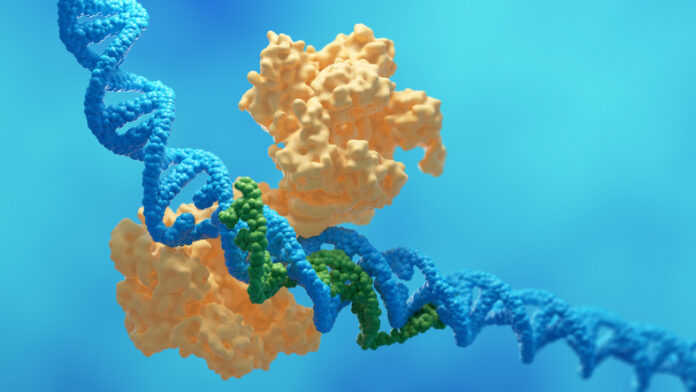
Scientists at Arc Institute, Gladstone Institutes, and the University of California, San Francisco (UCSF) have developed an epigenetic editing platform that allows for the safe and simultaneous modification of multiple genes in primary human T cells. Their work, published in Nature Biotechnology, leveraged two RNA-based editing tools called CRISPRoff and CRISPRon that silence or activate genes via epigenetic modifications.
“The T cells essentially memorize our programming instructions,” says Luke Gilbert, PhD, an Arc Institute core investigator and an associate professor at UCSF. “We deliver the epigenetic editors for just a couple of days, but the gene silencing effects remain stable through dozens of cell divisions and multiple rounds of immune activation.”
Unlike traditional CRISPR methods that cuts DNA to inactivate or alter genes, CRISPRoff and CRISPRon don’t create double-strand breaks. This reduces the risk of chromosomal abnormalities and toxicity in engineered T cells.
The researchers took this new approach as a potential pathway to produce T cell therapies, such as CAR T, that can be effective in solid tumors. While CRISPR–Cas9 editing has been widely used to create CAR T cells targeting blood cancers, using the same approach for the treatment of solid tumors has been difficult due to T cell exhaustion and toxicity from multiplexed gene edits. Prior research in cell lines, particularly HEK293T cells, demonstrated that epigenetic editors could induce heritable gene silencing without changing the DNA sequence, information that the team leveraged to engineer more complex “armored” T cells that can function in solid tumors.
Specifically, CRISPRoff enables gene silencing by depositing methylation marks at target promoters, while CRISPRon activates gene expression by removing these marks. Significantly, the team’s research showed that up to five genes could be epigenetically modified at once without compromising cell viability. “This approach is highly specific to the target loci and durable through multiple T cell activations, numerous cell divisions and transfer in vivo,” the researchers noted.
To validate the new platform the researchers engineered CAR T cells with enhanced anti-cancer properties. Using CRISPR, the team inserted a chimeric antigen receptor (CAR) and simultaneously silenced the RASA2 gene with CRISPRoff, which removed a molecular brake on T cell activation. When applied to preclinical mouse models of leukemia, the dual-engineered T cells maintained cancer-killing ability across repeated challenges and outperformed standard CAR T cells in tumor control and survival.
“Bringing together the combined power of genetic and epigenetic engineering now offers broad hopes to develop distinct programs to treat a wide range of different diseases,” said co-senior author Alex Marson, MD, PhD, director of the Gladstone-UCSF Institute of Genomic Immunology.
The research team noted that the platform could be applied to develop T cell therapies for other health conditions and treatments, including autoimmune disorders, transplantation, and other immune-related conditions. Further, since CRISPRoff and CRISPRon are compatible with existing manufacturing protocols used for FDA-approved CAR T products, the technology could be adopted for clinical use after conversion to clinical-grade materials.
“When we started, we weren’t sure that this would be successful in T cells, and it took years of methodical optimization to overcome some fundamental challenges, but it’s been so gratifying to see that the core technology is extremely robust,” Gilbert said.